
When We Throw Plastic Away
About this Article
Lines of Inquiry
- Connections among collection, sorting, transport, treatment, and final waste pathways.
- Changes in a plastic item’s possible destination as it moves through different waste-system stages.
- Differences in outcomes when local infrastructure, facilities, and rules are not the same.
Guiding Questions
- Why does choosing a bin not necessarily determine where an item finally goes?
- How could the same plastic container have different outcomes in two different communities?
When We Throw Plastic Away
After the Bin
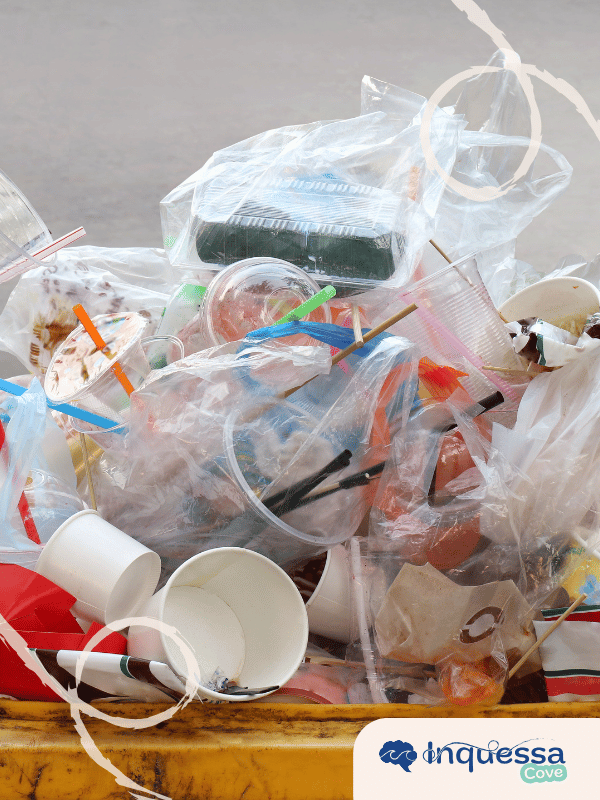
Putting plastic in a bin does not make it disappear. Waste pathways are the different routes discarded materials can follow after use. Plastic may be reused, recycled, buried, burned, exported, or escape into the environment.
A waste system connects collection, sorting, transport, treatment, recycling, and disposal. Different communities have different services and facilities, so the same kind of plastic may follow different paths.
Collected With Other Waste
Some plastic is collected with ordinary rubbish. It may later go to treatment, burning, or disposal instead of recycling.
Other places collect certain plastics separately. Even then, putting an item in a recycling bin does not guarantee its final destination. Workers and machines still need to sort it.
Sent for Recycling
Plastic sent toward recycling has to be separated from other materials and from other kinds of plastic. Some facilities use infrared sorting, which uses infrared light and sensors to identify materials.
Some modern sorting machines can identify and sort up to 10 plastic bottles every second by using infrared light. This is only one step. A recycling bin begins a pathway rather than finishing it.
Buried or Burned
A landfill is a place where waste is buried or stored. Plastic that is not reused or recycled may go to landfill. In some places it is burned instead.
About 79% of all plastic waste ever generated has ended up in landfills or been dumped into the natural environment. Much of that plastic can remain there for hundreds of years.
When Plastic Escapes the System
Plastic can also be dropped as litter, blown from bins, lost during transport, or dumped where services are limited.
Once it escapes formal collection, it can enter streets, soil, rivers, or other environments. “Away” is not one place. It is a set of different pathways shaped by local systems and choices.
After the Bin
Putting plastic in a bin does not make it disappear. Waste pathways are the different routes materials may take after people discard them. Recycling, reuse, landfill, incineration, export, or leakage into the environment can all become waste pathways for plastic. The available waste pathways differ between communities because sorting systems, facilities, rules, and infrastructure are not the same everywhere.
A community’s waste system connects collection, sorting, transport, recycling, treatment, and disposal. This means where plastic goes depends on the services and facilities in the local system. A plastic item’s outcome therefore depends on several stages after disposal.
Collected With Other Waste
Some plastic is collected with general rubbish. Once mixed with other waste, it may be transported to a facility for treatment, burning, or disposal instead of recycling.
Other communities collect certain plastics separately, either at homes or at special collection points. Even then, putting an item into a recycling bin does not guarantee its final destination. Workers and equipment may still need to sort the material, and local facilities decide which types of plastic can continue along a recycling pathway.
Sent for Recycling
Plastic sent for recycling must first be separated from other materials and from different kinds of plastic. Some recycling centers use infrared light and sensors to identify different plastic materials as they move along a sorting line. This automated method is called infrared sorting.
Some sorting machines can identify and sort up to 10 plastic bottles every second. They use infrared light to recognize the material in a fraction of a millisecond. This is only one part of the recycling process, but it shows that putting plastic in a recycling bin begins a pathway rather than completing it.
Buried or Burned
Plastic that is not reused or recycled may follow other routes. A landfill, a managed place where waste is buried, receives plastic that local waste systems do not recover. In some places, plastic waste is also burned, sometimes in systems that recover energy.
About 79 percent of all plastic waste ever generated has ended up in landfills or been dumped into the natural environment. Much of this plastic can remain there for hundreds of years. Where plastic goes depends greatly on the waste system available in that place.
When Plastic Escapes the System
Not all discarded plastic stays inside collection and disposal systems. Plastic can be dropped as litter, lost during transport, blown from bins, or dumped where waste services are limited.
Once plastic escapes formal collection, it can enter soil, streets, waterways, or other parts of the environment. Plastic may be recycled, buried, burned, reused, exported, or released into the environment depending on the systems around it. “Away” is therefore not one destination. It is a set of different pathways shaped by local choices and infrastructure.
After the Bin
Putting plastic in a bin does not make it disappear. Waste pathways are the different routes discarded materials can follow after use. Recycling, reuse, landfill, incineration, export, or leakage into the environment can all become pathways for plastic.
A waste system connects collection, sorting, transport, processing, recycling, treatment, and disposal of discarded materials. A plastic item’s outcome therefore depends on several stages after disposal. The available pathways also differ from place to place because communities have different collection services, facilities, markets, infrastructure, and rules.
Collected With Other Waste
Some plastic is collected with general rubbish. Once mixed with other waste, it may be transported to a facility for treatment, burning, or disposal rather than recycling.
Other communities collect certain plastics separately, either at homes or at special collection points. Even then, putting an item into a particular bin does not guarantee its final destination. Workers and equipment may still need to sort the material, and local facilities determine which types of plastic can continue along a recycling pathway.
Sent for Recycling
Plastic sent for recycling must first be separated from other materials and from different kinds of plastic. Some facilities use infrared sorting, a method that uses infrared light and sensors to identify different materials.
Modern sorting machines can work extremely quickly. Some machines can identify and sort up to 10 plastic bottles every second by using infrared light to detect the material in a fraction of a millisecond. This is only one part of the recycling process, but it shows that a recycling bin begins a pathway rather than completing it.
Buried or Burned
Plastic that is not reused or recycled may follow other routes. A landfill, a place where waste is buried or stored, receives materials that local waste systems do not recover. In some places, plastic waste is also burned, sometimes as part of systems that recover energy.
About 79% of all plastic waste ever generated has ended up in landfills or been dumped into the natural environment. Much of that plastic can remain there for hundreds of years. Where plastic goes depends heavily on the waste system available in that place.
When Plastic Escapes the System
Not all discarded plastic stays inside collection and disposal systems. Plastic can be dropped as litter, lost during transport, blown from bins, or dumped where waste services are limited.
Once plastic escapes formal collection, it can enter soil, streets, waterways, or other parts of the environment. This is another possible waste pathway, but it is not the only one. Plastic may be recycled, buried, burned, reused, exported, or released into the environment depending on the systems around it. “Away” is therefore not one destination. It is a set of different pathways shaped by local choices and infrastructure.
After the Bin
Putting plastic in a bin does not make it disappear. Waste pathways are the different routes materials may follow once they enter a waste system. Recycling, reuse, landfill, incineration, export, or release into the environment can all become pathways for discarded plastic.
A waste system connects the collection, sorting, transport, treatment, recycling, and disposal of discarded materials. Therefore, what happens to a plastic item depends on several stages after someone throws it away. These pathways also differ from place to place because communities have different collection services, facilities, markets, infrastructure, and rules.
Collected With Other Waste
Some plastic is collected together with general rubbish. Once it is mixed with other waste, it may be transported to a facility for treatment, burning, or disposal rather than recycling.
Other communities collect certain plastics separately at homes or special collection points. However, placing an item in a recycling bin does not guarantee that recycling will be its final pathway. Workers and machines may still need to sort the material, and local facilities determine which types of plastic can continue through the recycling system.
Sent for Recycling
Plastic sent for recycling must first be separated from other materials and from different kinds of plastic. Some facilities use infrared sorting, which uses infrared light and sensors to identify and separate different materials.
Some recycling machines can identify and sort up to 10 plastic bottles every second, using infrared light to recognize the material in a fraction of a millisecond. Although these machines work extremely quickly, sorting is only one part of the recycling process. A recycling bin begins a pathway rather than completing it.
Buried or Burned
Plastic that is not reused or recycled may follow other routes. A landfill is a place where waste is buried or stored, and it receives materials that local waste systems do not recover. In some places, plastic waste is also burned, sometimes in systems that capture some of the energy released.
About 79 percent of all plastic waste ever generated has ended up in landfills or been dumped into the natural environment. Much of that plastic can remain there for hundreds of years. Where discarded plastic goes therefore depends heavily on the waste system available in that place.
When Plastic Escapes the System
Not all discarded plastic stays inside formal collection and disposal systems. Plastic can be dropped as litter, lost during transport, blown from bins, or dumped where waste services are limited.
Once plastic escapes collection, it can enter soil, streets, waterways, or other parts of the environment. This is another possible waste pathway, but it is not the only one. Plastic may be recycled, buried, burned, reused, exported, or released into the environment depending on the systems around it. “Away” is therefore not one destination. It is a set of different pathways shaped by local choices and infrastructure.
Key Vocabulary
discarded material (noun) ️ Material that someone has finished using and has thrown away or placed into a waste system. (waste, unwanted material)
collection service (noun) A system that gathers waste or recyclables from homes, businesses, or collection points. (waste collection, pickup service)
infrastructure (noun) ️ The facilities, equipment, and systems needed for a service to operate. (supporting systems, facilities)
general rubbish (noun) ️ Mixed everyday waste that is not collected separately for another pathway. (mixed waste, ordinary trash)
formal collection (noun) An organized service for collecting discarded materials. (organized collection, waste service)
destination (noun) The place or pathway where something eventually arrives. (endpoint, final location)
treatment (noun) ⚙️ A process used to handle waste before recovery or disposal. (processing, waste handling)
collection point (noun) A place where people bring particular kinds of waste or recyclables. (drop-off point, collection site)
sorting facility (noun) A place where mixed materials are separated into different groups. (sorting center, separation facility)
processing (noun) ⚙️ The steps used to prepare or treat a material after collection. (treatment, handling)
incineration (noun) The controlled burning of waste. (waste burning, thermal treatment)
export (noun) The movement of goods or materials from one country to another. (overseas shipment, international movement)
litter (noun) Waste left or dropped in places where it can escape normal collection systems. (discarded rubbish, loose waste)
