Curious Kids.

Big Questions.

Real Answers.

Helping students explore big questions
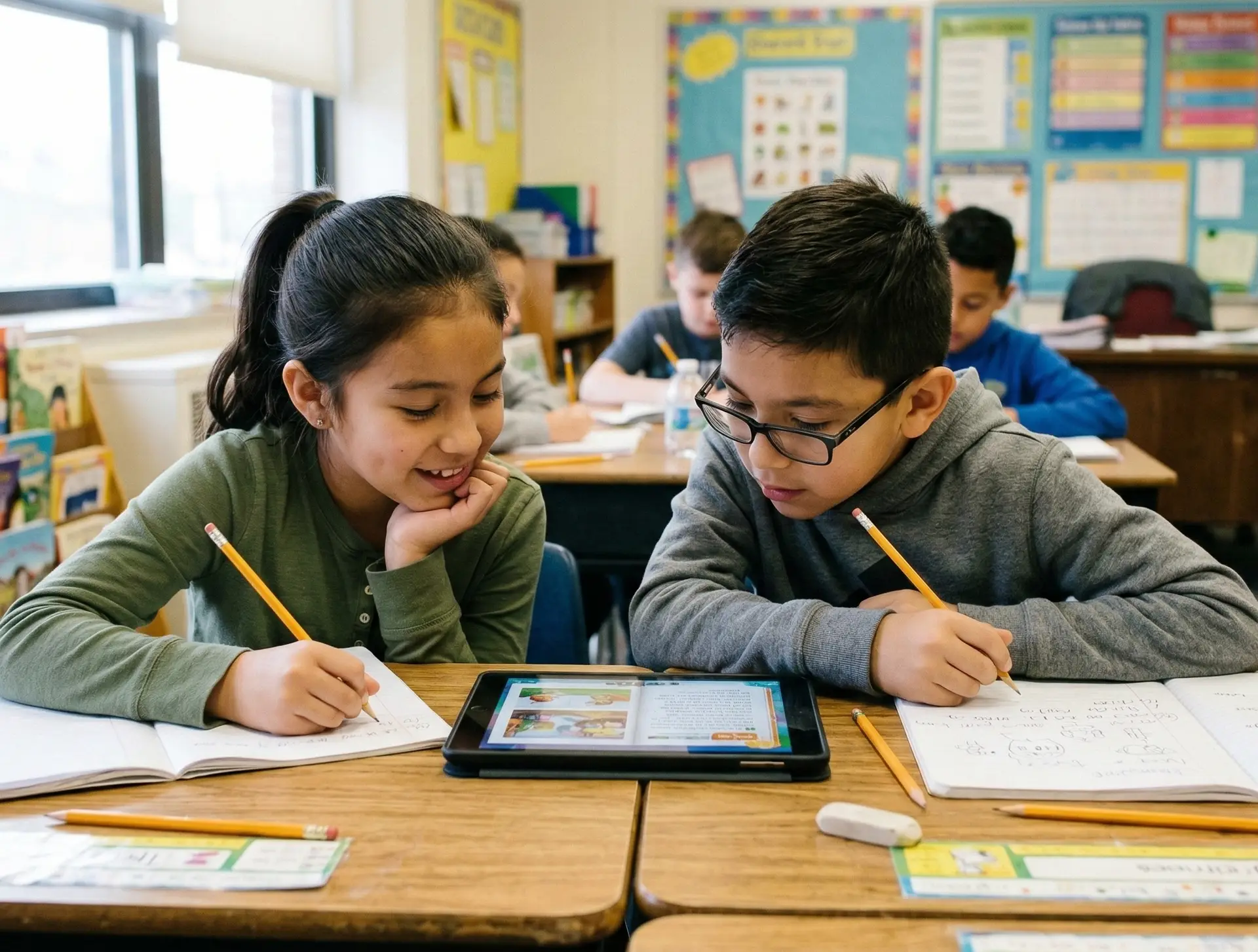
Two students working together with a tablet in a classroom
Sign Post

Explore Inquessa

Follow your curiosity, investigate big questions, or look something up. Inquessa gives young learners different ways to explore and understand the world around them.
Inquessa Cove logo

Inquessa Cove

Explore something that interests you.

Discover nonfiction about science, history, geography, global issues, and more, with articles available at different reading levels.

Explore the Cove
Inquessa Quests

Inquessa Quests

Investigate a bigger question.

Follow connected ideas and information through inquiry pathways designed to help students explore a topic more deeply.

Explore Quests

Inquessapedia logo

Inquessapedia

Need to look something up?

Find clear, student-friendly explanations of topics and concepts while learning, researching, or following your curiosity.

Explore Inquessapedia

Big Questions Lead Somewhere

Curiosity often starts with one question. Finding an answer can lead to another question, a surprising connection, or something new to investigate.

Inquessa helps students go beyond simply finding facts. Articles, Quests, and reference tools encourage learners to build knowledge, make connections, consider different perspectives, and keep asking questions.

Because understanding the world isn't just about knowing the "what." It's about wondering how, why, and what else.

Question mark
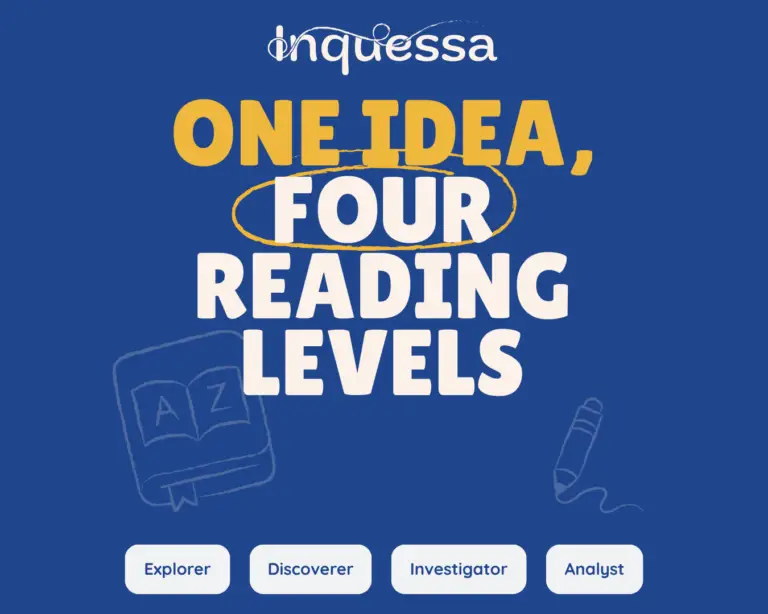
One idea presented at four reading levels: Explorer, Discoverer, Investigator, and Analyst

Differentiation, built in.

Students don’t all read in the same way or at the same level. Inquessa lets learners explore the same ideas while reading with the level of language, detail, and support that fits them best.

The example below shows the same topic at four reading levels. Use the tabs to compare how the text changes for different readers.


What is a Water Footprint?

The food on your plate needs water long before you eat it. A water footprint is the amount of water used to grow, make, and move the food we eat. Water may be used on a farm, in a factory, while food is moved, or while it is prepared.

Some of this water is easy to see. Farmers water crops, and animals need water to drink. Other water is harder to see. Water may wash food, clean equipment, or help prepare packaging.

A food’s water footprint includes much more than the water we drink with a meal.


What is a Water Footprint?

The food on your plate needs water long before it reaches your kitchen. A water footprint is the amount of water used to grow, make, and transport the food we eat. Water may be used on a farm, in a factory, during transportation, or while food is being prepared.

Some of this water is easy to see. Farmers water crops, and animals need water to drink. Other uses are hidden. Water may be needed to wash ingredients, process food, clean equipment, or prepare packaging.

Looking at water footprints helps us see that food uses much more water than the water we drink with a meal.


What is a Water Footprint?

The food on your plate needs water long before it reaches your kitchen. A water footprint is the total amount of water used to grow, produce, and transport the food we eat. That water may be used on a farm, inside a factory, during transportation, or while food is being prepared.

Some of this water is easy to notice. Farmers water crops, and animals need water to drink. Other uses are less visible. Water may be needed to wash ingredients, process food, clean equipment, or prepare packaging. All of these uses become part of a food’s water footprint.

Looking at water footprints helps us see that the water connected to food includes much more than the water we drink with a meal.


What is a Water Footprint?

The food on your plate depends on water long before it reaches your kitchen. A water footprint is the total amount of water used across the processes of growing, producing, and transporting the food we eat. This water may be used on a farm, inside a factory, during transportation, or while food is being prepared.

Some of this water use is easy to see. Farmers water crops, and animals need water to drink. Other uses are less visible because water may also be needed to wash ingredients, process food, clean equipment, or prepare packaging. Together, these uses contribute to a food’s total water footprint.

Examining water footprints reveals that the water connected to food extends far beyond what we drink with a meal. Much of it has already been used at different stages before the food ever reaches us.

Bring Inquessa Into the Classroom

Inquessa helps teachers bring differentiated nonfiction and inquiry-based learning into upper elementary and middle school classrooms.

Different Readers

Support students with four reading levels.

Bigger Questions

Build inquiry around connected ideas and topics.

Flexible Teaching

Use Inquessa for whole-class, small-group, research, or independent exploration.

Explore Inquessa for Schools
Portrait of the educator and creator of Inquessa

Jana Poukka

Educator and Creator of Inquessa 

The Inquessa Story

Created for Curious Learners

Inquessa was created by educator Jana Poukka after more than 20 years working with students in international classrooms.

She saw the same challenge again and again: curious students had big questions, but finding age-appropriate information that went beyond simple facts wasn't always easy.

Inquessa grew from the idea that students deserve access to meaningful ideas, opportunities to ask deeper questions, and resources that support them as readers.

About Inquessa

Bring Inquessa to Your School

Give students more ways to explore big ideas, build knowledge, and read at a level that works for them.

We use cookies

We use cookies to improve your experience on this website. You may choose which types of cookies to allow and change your preferences at any time. Disabling cookies may impact your experience on this website. You can learn more by viewing our Cookie Policy.