
Plastic Waste Affects Some Communities More
About this Article
Lines of Inquiry
- Different ways the same plastic system can create unequal effects depending on where people live and which services surround them.
- Connections among plastic production, waste infrastructure, pollution, and the communities located nearby.
- The importance of including people who experience environmental effects directly when decisions are made about services, facilities, and solutions.
Guiding Questions
- Why can two communities using similar plastic products experience very different amounts of pollution?
- How can limited waste services change what happens to plastic after people throw it away?
- Why should people who live near a factory, dump, or waste facility have a meaningful role in decisions that affect that place?
Plastic Waste Affects Some Communities More
Unequal Impacts From the Same Material
Plastic is made, used, and thrown away around the world, but its effects are not shared equally. When the same problem harms some communities more than others, these are called unequal impacts.
Where people live can matter. Nearby factories, waste facilities, local services, and access to safe waste systems can all affect how much pollution a community faces.
Two communities may use similar plastic products but experience very different results. One may have regular waste collection and safe disposal. Another may be near a large factory or have fewer waste services.
Living Near Plastic Production
Plastic begins in industrial areas where raw materials are processed and plastic is made. Large production centers include the Baytown and Mont Belvieu area in Texas and Ludwigshafen, Germany.
People living near these places may experience some effects of plastic production even when the finished products are used somewhere else. Communities close to large plastic manufacturing plants can experience more industrial air pollution and greater respiratory risks than national averages.
The benefits of plastic products may be spread across many places, while some effects of production stay closer to the communities where plastic is made.
Dumps, Landfills, and Incinerators
Waste from homes and businesses has to go somewhere. In places with controlled waste systems, it may go to managed landfills, recycling facilities, or incinerators.
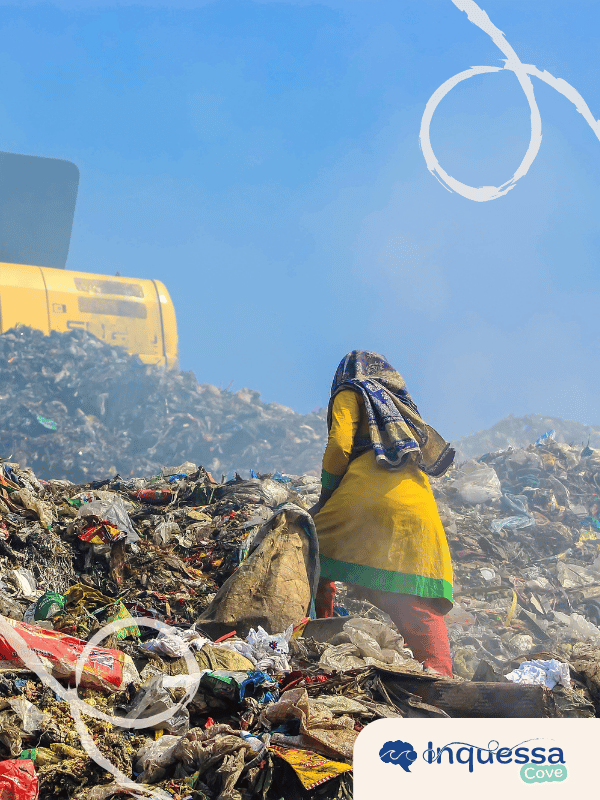
When services are missing or overloaded, waste may collect in open dumps or be burned outside. People living nearby may experience pollution that people farther away do not.
Plastic can be especially difficult to manage when large amounts of waste keep arriving but local services have not grown enough to handle it.
Plastic in Waterways and Streets
Plastic can also collect in streets, drains, rivers, and other local spaces when waste collection cannot keep up. Uncollected waste may block drains, add to flooding, pollute water, or move toward rivers and seas.
Seeing plastic waste in a neighborhood does not mean the people living there do not care. Collection schedules, roads, drainage, funding, disposal sites, and the amount of waste entering an area all affect what happens.
Waste Services Are Not Equal Everywhere
Reliable waste management needs more than bins. Communities need workers, collection vehicles, roads, sorting or treatment facilities, safe disposal sites, and enough money to keep the system working.
These services are not equally available everywhere. In low-income countries, about 60% of solid waste goes uncollected, and 93% is not managed properly.
Differences also exist within countries and cities. One neighborhood may have regular collection while another has fewer services. This can lead to very different amounts of waste and pollution even within the same wider plastic system.
Health, Voice, and Decision-Making
Communities affected by factories, waste facilities, or poor collection often know the local problems closely. However, they may not control the choices that affect them.
Decision-making, choosing what should happen, can include people affected by plastic waste. Communities can help explain local conditions and needs when choices are made about waste services, pollution, funding, or where facilities are placed.
Why Fairness Matters in Plastic Solutions
Environmental fairness means considering whether environmental benefits and harms are shared fairly. Environmental fairness also asks whose needs and voices are included when solutions are chosen.
Reducing plastic pollution is important, but it also matters where the remaining harm goes. A solution that improves one community while leaving another with more pollution does not affect everyone equally.
Fair plastic solutions need to consider services, location, environmental effects, and the voices of the people most directly affected.
Unequal Impacts From the Same Material
Plastic is produced, used, and thrown away around the world, but its environmental effects are not shared evenly. When pollution or waste harms some communities more than others, these are called unequal impacts. This means communities can experience different harm levels from the same pollution system.
Two communities may use similar plastic products but face very different results. One might have reliable waste collection and safe disposal. Another might be near a large industrial site or in an area where waste services are limited.
Living Near Plastic Production
Plastic begins in industrial areas where raw materials are processed and plastics are made. Major production areas include Baytown and Mont Belvieu in Texas and Ludwigshafen, Germany, where large chemical and plastic-production facilities operate.
For people living nearby, plastic production can become part of the local environment even when the finished products are used far away. Communities near large plastic manufacturing plants can experience more industrial air pollution. They can also face greater respiratory risks than national averages. The benefits of plastic products may spread widely while some effects of production remain concentrated near the places where plastic is made.
Dumps, Landfills, and Incinerators
Waste collected from homes and businesses has to go somewhere. In places with controlled systems, it may go to managed landfills, recycling facilities, or incinerators. Where these systems are missing or overloaded, waste may collect in uncontrolled dumps or be burned in the open.
These conditions are more likely where communities lack reliable collection and safe disposal systems. Plastic can be especially difficult to manage because large amounts of packaging and other waste may keep arriving even when local services have not grown enough to handle it. People living near dumps or open-burning sites may then experience pollution that people farther away do not.
Plastic in Waterways and Streets
Plastic can also collect in streets, drains, rivers, and other local spaces when waste collection cannot keep up. Uncollected waste may block drainage, add to flooding, pollute water, or travel toward rivers and seas.
Seeing plastic in a neighborhood does not mean the people living there do not care about waste. Collection schedules, road access, drainage, local funding, available disposal sites, and the amount of waste entering an area can all affect what happens to discarded materials.
Waste Services Are Not Equal Everywhere
Reliable waste management requires more than bins. Communities need collection vehicles, workers, roads, sorting or treatment facilities, safe disposal sites, and enough funding to keep those services working.
Those resources are not shared equally. Some low-income or underserved areas may have irregular collection, few safe disposal choices, or no formal service at all. Without enough infrastructure, plastic and other waste can collect in streets, be dumped on open land, enter waterways, or be burned.
In low-income countries, about 60 percent of solid waste goes uncollected, and 93 percent is not managed properly. But unequal waste services can also exist within the same country or city. A well-served neighborhood and an underserved neighborhood may experience very different amounts of waste and pollution even though both are part of the same wider plastic system.
Health, Voice, and Decision-Making
Communities affected by factories, waste facilities, or poor collection often know the local effects closely, but they may not control the choices behind them. Decision-making, choosing between possible actions or options, can give affected communities a voice in plastic policies.
Including affected communities gives people opportunities to describe local conditions, identify needs, and help shape decisions about where facilities go, which services receive funding, and how pollution should be addressed.
Why Fairness Matters in Plastic Solutions
Environmental fairness means considering whether environmental risks, benefits, and decision-making are shared fairly among communities. Reducing the total amount of plastic pollution is important, but fairness also asks where the remaining harm occurs and who carries it.
A solution that improves conditions in one place while leaving another community with more pollution has not affected everyone equally. Fair plastic solutions therefore need to consider services, location, environmental effects, and the voices of the people most directly affected.
Plastic Waste Affects Some Communities More
Unequal Impacts From the Same Material
Plastic is produced, used, and discarded around the world, but its environmental effects are not shared evenly. When environmental harms or costs affect some communities more strongly than others, these are called unequal impacts. Location, nearby industry, waste facilities, infrastructure, and access to services can all influence how much pollution a community experiences.
Two communities may use similar plastic products but face very different consequences. One might have reliable collection and safe disposal, while another is located near a large industrial site or in an area where waste services are limited.
Living Near Plastic Production
Plastic begins in industrial areas where raw materials are processed and plastics are manufactured. Major production centers include the Baytown and Mont Belvieu area in Texas and Ludwigshafen, Germany, where large chemical and plastic-production facilities operate.
For people living near these industrial areas, plastic production can become part of the local environment even when the finished products are used far away. Communities close to large plastic manufacturing plants can experience more industrial air pollution and greater respiratory risks than national averages. The benefits of plastic products can be spread widely while some production-related effects remain concentrated near the places where plastics are made.
Dumps, Landfills, and Incinerators
Waste collected from homes and businesses has to go somewhere. In places with controlled systems, it may be taken to managed landfills, recycling facilities, or incinerators. Where those systems are missing or overloaded, waste may instead collect in uncontrolled dumps or be burned in the open.
These conditions are more likely where communities lack reliable collection and safe disposal infrastructure. Plastic can be especially difficult to manage because large amounts of packaging and other modern waste continue arriving even when local services have not grown enough to handle them. People living near dumps or open-burning sites may then experience pollution that people farther away never see.
Plastic in Waterways and Streets
Plastic can also accumulate in streets, drains, rivers, and other local spaces when collection systems cannot keep up. Uncollected waste may block drainage, contribute to flooding, pollute water, or travel toward rivers and seas.
Seeing plastic in a neighborhood does not mean the people living there do not care about waste. Collection schedules, road access, drainage, local funding, available disposal sites, and the amount of waste entering an area all influence what happens to discarded materials.
Waste Services Are Not Equal Everywhere
Reliable waste management requires more than bins. Communities need collection vehicles, workers, roads, treatment or sorting facilities, safe disposal sites, and enough funding to keep those services operating.
Those resources are not distributed equally. Low-income and underserved areas may have irregular collection, few safe disposal options, or no formal service at all. Without enough infrastructure, plastic and other waste can accumulate in streets, be dumped on open land, enter waterways, or be burned.
In low-income countries, about 60% of solid waste goes uncollected, and 93% is not managed properly. But inequality can also exist within countries and cities. A well-served neighborhood and an underserved neighborhood may experience very different amounts of waste and pollution even though they are part of the same wider plastic system.
Health, Voice, and Decision-Making
Communities affected by factories, waste facilities, or poor collection often know the local effects closely, but they may not control the choices behind them. Groups use decision-making, the process of choosing between possible actions, when deciding where facilities go, which services receive funding, or how pollution should be addressed.
Including affected communities gives people opportunities to describe local conditions, identify needs, and help shape decisions that influence their surroundings.
Why Fairness Matters in Plastic Solutions
Environmental fairness is the principle that environmental risks, benefits, and decision-making should not be distributed unfairly among communities. Reducing the total amount of plastic pollution is important, but fairness also asks where the remaining harm occurs and who carries it.
A solution that improves conditions in one place while leaving another community with more pollution has not affected everyone equally. Fair plastic solutions therefore need to consider services, location, environmental effects, and the voices of the people most directly affected.
Unequal Impacts From the Same Material
Plastic is produced, used, and discarded around the world, but its environmental effects are not shared evenly. When environmental harms or costs affect some communities more strongly than others, these are called unequal impacts. Location, nearby industry, waste facilities, infrastructure, and access to services can all shape how much pollution a community experiences.
Two communities may use similar plastic products while facing very different consequences. One may have reliable collection and safe disposal services, while another may be located near a major industrial site or in an area where waste systems are limited. Looking only at how much plastic people use can therefore hide important differences in what happens around them.
Living Near Plastic Production
Plastic begins in industrial areas where raw materials are processed and plastics are manufactured. Major production centers include the Baytown and Mont Belvieu area in Texas and Ludwigshafen, Germany, where large chemical and plastic-production facilities operate.
For people living near these industrial areas, plastic production can become part of the local environment even when the finished products are sold and used far away. Communities located near large plastic manufacturing plants can experience higher levels of industrial air pollution and greater respiratory risks than national averages. The benefits of plastic products may be distributed widely, while some production-related effects remain concentrated near the places where those plastics are made.
Dumps, Landfills, and Incinerators
Waste collected from homes and businesses must eventually be handled somewhere. In places with controlled systems, it may be sent to managed landfills, recycling facilities, or incinerators. When those systems are missing or overloaded, waste may instead collect in uncontrolled dumps or be burned in the open.
These conditions are more likely where reliable collection and safe disposal infrastructure are limited. Plastic can be especially difficult to manage because large amounts of packaging and other modern waste may continue arriving even when local services have not expanded enough to handle them. People living near dumps or open-burning sites can then experience pollution that is much less visible to communities farther away.
Plastic in Waterways and Streets
Plastic may also build up in streets, drains, rivers, and other local spaces when collection systems cannot keep pace with the amount of waste being produced. Uncollected material can block drainage, contribute to flooding, pollute water, or travel toward rivers and seas.
Seeing plastic waste in a neighborhood does not mean the people living there do not care about managing it. Collection schedules, road access, drainage, local funding, available disposal sites, and the amount of waste entering an area all influence what happens after materials are discarded. Waste outcomes therefore depend on systems as well as individual behavior.
Waste Services Are Not Equal Everywhere
Reliable waste management requires much more than providing bins. Communities need collection vehicles, workers, roads, treatment or sorting facilities, safe disposal sites, and enough funding to keep those services operating.
Those resources are not distributed equally. Low-income and underserved areas may have irregular collection, few safe disposal choices, or no formal service at all. Without sufficient infrastructure, plastic and other waste can accumulate in streets, be dumped on open land, enter waterways, or be burned.
In low-income countries, about 60 percent of solid waste is not collected, while about 93 percent is not managed properly. However, unequal services can also exist within the same country or city. A well-served neighborhood and an underserved neighborhood may experience very different amounts of waste and pollution even though both are part of the same wider plastic system.
Health, Voice, and Decision-Making
Communities affected by factories, waste facilities, or poor collection often understand local conditions closely, yet they may not control the choices that created those conditions. Decision-making is the process of choosing between possible actions and can involve comparing evidence, priorities, costs, and possible consequences. Decisions about where facilities are built, which services receive funding, or how pollution is addressed can directly affect nearby communities.
Including affected communities gives people opportunities to describe local conditions, identify priorities, and contribute information that distant decision-makers may not see. Their experience can help shape choices about the environments in which they live.
Why Fairness Matters in Plastic Solutions
Environmental fairness is the principle that environmental risks, benefits, and decision-making should not be distributed unfairly among communities. Reducing the total amount of plastic pollution matters, but fairness also asks where the remaining harm occurs and who is carrying it.
A solution that improves conditions in one place while leaving another community with greater pollution has not affected everyone equally. Fair plastic solutions therefore need to consider access to services, location, environmental effects, and the voices of the people most directly affected.
Key Vocabulary
industrial area (noun) A place where factories and other large production facilities are located. (manufacturing area, industrial zone)
production center (noun) An area where large amounts of a material or product are made. (manufacturing center, industrial hub)
industrial air pollution (noun) ️ Air pollution produced by factories or other industrial activities. (factory pollution, industrial emissions)
respiratory risk (noun) A greater chance of problems affecting breathing or the lungs. (breathing risk, lung risk)
controlled waste system (noun) ♻️ A waste system designed to collect and manage waste in organized, regulated ways. (managed waste system, formal waste system)
uncontrolled dump (noun) ️ A place where waste is left without the protections of a managed disposal site. (open dump, unmanaged dump)
open burning (noun) Burning waste outside without a controlled waste facility. (outdoor burning, uncontrolled burning)
drainage (noun) ️ A system that carries rainwater or other water away from an area. (water drainage, runoff system)
underserved (adjective) ️ Receiving fewer services or resources than are needed. (poorly served, lacking services)
formal service (noun) An organized service officially provided to a community, such as regular waste collection. (official service, organized service)
local funding (noun) Money available in a community to support services or projects. (community funding, local resources)
affected community (noun) A community that experiences the effects of a decision, facility, or environmental problem. (impacted community, local community)
local conditions (noun) The particular circumstances in a place that affect how a problem is experienced. (local situation, nearby conditions)
