
Plastic in Global Supply Chains
About this Article
Lines of Inquiry
- Connections between factories, warehouses, transport systems, stores, and the plastic used between those stages.
- The hidden functions plastic performs in protecting, organizing, containing, labeling, and stabilizing goods.
- The relationship between material properties and the demands of long-distance transport and storage.
Guiding Questions
- Why might a shopper never see much of the plastic used to move a product?
- What could have to change elsewhere in a supply chain if stretch wrap or another common plastic material were replaced?
Plastic in Global Supply Chains
Plastic Behind the Journey
Global trade depends on a supply chain, the connected system that makes and moves products through factories, storage, transport, and stores.
Plastic can support many parts of this journey. Products may be wrapped, cushioned, labeled, bundled, or placed inside larger containers before shoppers ever see them.
Wrapping and Protecting Goods
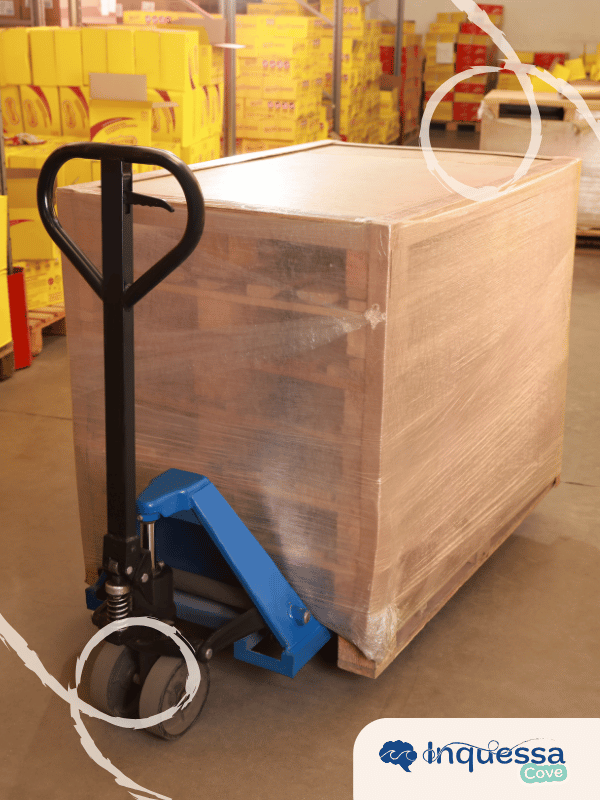
Warehouses need to stop boxes from shifting on forklifts, trucks, trains, and ships. Workers may use stretch wrap, stretchy plastic film, to hold boxes together during storage or transport.
Boxes are often stacked on wooden pallets and wrapped tightly. More than 3 million metric tons of plastic stretch wrap are used around the world each year to secure cargo on pallets during transport by trucks and ships. This plastic often works behind the scenes rather than appearing on a store shelf.
Pallets, Containers, and Bulk Packaging
Bulk packaging holds or protects large amounts of goods together during shipping and storage. Large containers, films, crates, and protective covers can all do this job.
Plastic itself also travels before it becomes a finished product. Raw plastic material, often carried as small solid pellets called resin, is one of the high-volume chemical products moved by rail. Factories later turn this material into plastic products.
Plastic in Shipping, Storage, and Delivery
Plastic may appear at several points in one journey. Foam can cushion an object, film can cover a pallet, labels can identify a shipment, and reusable crates can hold groups of goods.
Some of this plastic stays with the product until a shopper buys it. Other plastic is removed in warehouses or shipping centers.
Why Global Trade Uses Lightweight Materials
Every package adds weight to a shipment. Lightweight plastic can protect goods without adding as much weight as some heavier materials.
Plastic can also be strong, flexible, or shaped for special transport jobs. These qualities help explain why it is used in films, crates, labels, and protective parts.
A System Built Around Protection and Speed
Modern supply chains are designed to move large amounts of goods while reducing damage and delays. Plastic has become part of that system.
Changing one plastic item may require changes in storage, transport, or protective equipment too. Plastic in global trade is not only something consumers buy. It can also be part of the system that helps products reach them.
Plastic Behind the Journey
Global trade relies on a supply chain, a connected network that moves goods through production and transport. Plastic can help a supply chain by protecting products, bundling loads, labeling goods, holding liquids, or reducing damage during transport. Within a supply chain, these uses connect plastic with logistics, storage, manufacturing, retail, and the movement of goods across long distances.
Products may be wrapped, cushioned, labeled, bundled, or placed inside larger containers before they travel. Plastic can help protect products, group loads, hold liquids, or reduce damage. These uses connect plastic with manufacturing, storage, shipping, and delivery across long distances.
Wrapping and Protecting Goods
Warehouses often need to keep boxes from shifting while they are moved by forklifts, trucks, trains, or ships. Stretch wrap, flexible plastic film used to secure goods, protects products as they move through supply chains. It is similar to household plastic wrap but is made for securing loads.
Boxes are often stacked on wooden pallets and then wrapped so the load stays stable. More than 3 million metric tons of plastic stretch wrap are used around the world each year to hold cargo securely on pallets during transport by trucks and ships. This plastic may never appear on a store shelf, but it helps protect products as they move between warehouses, ports, and stores.
Pallets, Containers, and Bulk Packaging
Supply chains also move materials in large quantities before they become finished products. Bulk packaging helps move large amounts of goods through supply chains, using large containers, wraps, or protective materials during transport.
Plastic itself can also travel before it becomes a finished object. Raw plastic material is often transported as small solid pellets called resin. Resin is one of the chemical products moved in large amounts by rail. Factories can later process this material into plastic products. Supply chains therefore carry both finished goods and the materials needed to make them.
Plastic in Shipping, Storage, and Delivery
Plastic can appear at several points during one journey. Protective foam may cushion an object inside a box, film may cover a pallet, labels may help workers identify a shipment, and reusable plastic crates may hold groups of products.
These tools help workers organize goods as they move between factories, warehouses, shipping centers, and stores. Some plastic stays with a product until a customer buys it, while other plastic is removed much earlier. Much of the plastic used in global trade works behind the scenes.
Why Global Trade Uses Lightweight Materials
Weight matters when goods travel long distances. Packaging and transport materials add to the total weight carried by trucks, trains, ships, or other vehicles. Lightweight plastic can provide protection without adding as much weight as some heavier materials.
Plastic can also be flexible, strong, or shaped for particular transport jobs. These properties help explain why businesses use it for films, crates, containers, labels, and protective parts. The choice is not only about convenience. It can also involve protecting goods and moving them efficiently.
A System Built Around Protection and Speed
Modern supply chains are designed to move large amounts of goods while reducing damage and delays. Plastic has become part of that system because it can protect, organize, contain, label, and stabilize products at many stages.
Removing one plastic item from a supply chain may affect more than the package itself. Warehouses, transport systems, storage methods, and protective equipment may also need to change. Plastic in global trade is not only something people buy. It is also part of the system that helps goods reach them.
Plastic Behind the Journey
Global trade relies on a supply chain, a connected network that moves goods through production, storage, and transport. Plastic can support many parts of this movement, often in ways shoppers never see.
Products may be wrapped, cushioned, labeled, bundled, or placed inside larger containers before they travel. Plastic can help a supply chain by protecting products, grouping loads, holding liquids, or reducing damage. These uses connect plastic with manufacturing, storage, shipping, and delivery across long distances.
Wrapping and Protecting Goods
Warehouses often need to keep boxes from shifting while they are moved by forklifts, trucks, trains, or ships. Stretch wrap, a thin, stretchy plastic film wrapped tightly around products, can hold items together during storage or transport. It is similar to household plastic wrap but is made for securing loads.
Boxes are often stacked on wooden pallets and then wrapped so the load stays stable. More than 3 million metric tons of plastic stretch wrap are used globally each year to secure cargo on pallets during transport by trucks and ships. This plastic may never appear on a store shelf, but it helps protect products as they move between warehouses, ports, and stores.
Pallets, Containers, and Bulk Packaging
Supply chains also move materials in large quantities before they become finished products. Bulk packaging supports shipping systems by grouping or protecting large amounts of goods during storage and long-distance transport. Large containers, plastic films, crates, and protective covers can all serve this purpose.
Plastic itself can travel before it becomes a finished object. Raw plastic material, often transported as small solid pellets called resin, is among the high-volume chemical products moved by rail. Factories can later process this material into plastic products. Supply chains therefore carry both finished goods and the materials needed to make them.
Plastic in Shipping, Storage, and Delivery
Plastic can appear at several points during one journey. Protective foam may cushion an object inside a box, film may cover a pallet, labels may help workers identify a shipment, and reusable plastic crates may hold groups of products.
These tools help workers organize goods while they move between factories, warehouses, shipping centers, and stores. Some plastic stays with a product until a customer buys it, while other plastic is removed much earlier. Much of the plastic used in global trade works behind the scenes.
Why Global Trade Uses Lightweight Materials
Weight matters when goods travel long distances. Packaging and transport materials add to the total weight carried by trucks, trains, ships, or other vehicles. Lightweight plastic can provide protection without adding as much weight as some heavier materials.
Plastic can also be flexible, strong, or shaped for particular transport jobs. These properties help explain why businesses use it for films, crates, containers, labels, and protective parts. The choice is not only about convenience. It can also involve protecting goods and moving them efficiently.
A System Built Around Protection and Speed
Modern supply chains are designed to move large quantities of goods while limiting damage and delays. Plastic has become part of that system because it can protect, organize, contain, label, and stabilize products at many stages.
Removing one plastic item from a supply chain may therefore affect more than the package itself. Warehouses, transport systems, storage methods, and protective equipment may also need to change. Plastic in global trade is not only something people buy. It is also part of the infrastructure that helps goods reach them.
Plastic Behind the Journey
Global trade relies on a supply chain, the connected network that moves goods through production, storage, transport, and sale. Plastic can support many parts of this movement, often in ways shoppers never see.
Products may be wrapped, cushioned, labeled, bundled, or placed inside larger containers before they travel. Plastic can help protect products, group loads, hold liquids, or reduce damage. These uses connect plastic with manufacturing, storage, shipping, and delivery across long distances.
Wrapping and Protecting Goods
Warehouses often need to keep boxes from shifting while they are moved by forklifts, trucks, trains, or ships. Stretch wrap is a thin plastic film that stretches tightly around products to hold them together during storage or transport. It is similar to household plastic wrap, but it is made for securing larger loads.
Boxes are often stacked on wooden pallets and then wrapped so the load stays stable. More than 3 million metric tons of plastic stretch wrap are used worldwide each year to secure cargo on pallets during transport by trucks and ships. This plastic may never appear on a store shelf, but it helps protect products as they move between warehouses, ports, and stores.
Pallets, Containers, and Bulk Packaging
Supply chains also move materials in large quantities before they become finished products. Bulk packaging includes large containers, protective wraps, and transport packaging that help goods move efficiently through supply chains. Large containers, plastic films, crates, and protective covers can all serve this purpose.
Plastic itself can also travel before it becomes a finished object. Raw plastic material, often transported as small solid pellets called resin, is one of the high-volume chemical products moved by rail. Factories can later process this material into plastic products. Supply chains therefore carry both finished goods and the raw materials needed to make them.
Plastic in Shipping, Storage, and Delivery
Plastic can appear at several points during one journey. Protective foam may cushion an object inside a box, film may cover a pallet, labels may help workers identify a shipment, and reusable plastic crates may hold groups of products.
These tools help workers organize and protect goods as they move between factories, warehouses, shipping centers, and stores. Some plastic stays with a product until a customer buys it, while other plastic is removed much earlier. Much of the plastic used in global trade works behind the scenes.
Why Global Trade Uses Lightweight Materials
Weight matters when goods travel long distances. Packaging and transport materials add to the total weight carried by trucks, trains, ships, or other vehicles. Lightweight plastic can provide protection without adding as much weight as some heavier materials.
Plastic can also be flexible, strong, or shaped for particular transport jobs. These properties help explain why businesses use it for films, crates, containers, labels, and protective parts. The choice is not only about convenience. It can also involve protecting goods and moving them efficiently.
A System Built Around Protection and Speed
Modern supply chains are designed to move large quantities of goods while limiting damage and delays. Plastic has become part of that system because it can protect, organize, contain, label, and stabilize products at many stages.
Removing one plastic item from a supply chain may therefore affect more than the package itself. Warehouses, transport systems, storage methods, and protective equipment may also need to change. Plastic in global trade is not only something people buy. It is also part of the systems that help goods reach them.
Key Vocabulary
global trade (noun) The buying, selling, and movement of goods between countries and regions. (international trade, world trade)
logistics (noun) The planning and organization needed to move, store, and deliver goods. (distribution planning, movement system)
pallet (noun) A flat platform used to stack and move goods with equipment such as forklifts. (shipping platform, load platform)
cargo (noun) Goods carried by a truck, train, ship, or aircraft. (freight, shipment)
stabilize (verb) To keep something steady and reduce unwanted movement. (steady, secure)
warehouse (noun) A large building where goods are stored before being moved or sold. (storage facility, distribution building)
resin (noun) Raw plastic material that may be transported as small solid pellets before being made into products. (plastic raw material, plastic pellets)
infrastructure (noun) ️ The facilities, equipment, and systems that allow an activity to operate. (supporting system, facilities)
forklift (noun) A vehicle with lifting arms used to move pallets and heavy loads. (lifting vehicle, warehouse vehicle)
shipment (noun) A group of goods being transported from one place to another. (delivery, load)
protective foam (noun) Lightweight material used to cushion goods and reduce damage during transport. (packing foam, cushioning material)
reusable crate (noun) A strong container designed to carry goods many times. (returnable crate, transport box)
shipping center (noun) A place where goods are collected, organized, and sent onward. (distribution center, transport hub)
long-distance transport (noun) The movement of goods over large distances between regions or countries. (long-haul shipping, distant transport)
