
Plastic and the Food We Eat
About this Article
Lines of Inquiry
- Different functions of plastic packaging and containers around food.
- The effects of heat, storage, contact time, and reuse on food-contact conditions.
- The importance of matching a container to its intended purpose.
Guiding Questions
- Why can two plastic containers that look similar have different intended uses?
- How can heating change a food-contact situation compared with cold storage?
- Why is a container looking sturdy not enough evidence that it was designed for repeated reuse?
Plastic and the Food We Eat
Food and Plastic Meet Often
Plastic can touch food during packaging, transport, storage, cooking, and serving. This is called food contact.
Plastic is useful around food because it can be light, waterproof, flexible, or shaped into many containers. But not every plastic item is designed for every food job.
Packaging Around Food
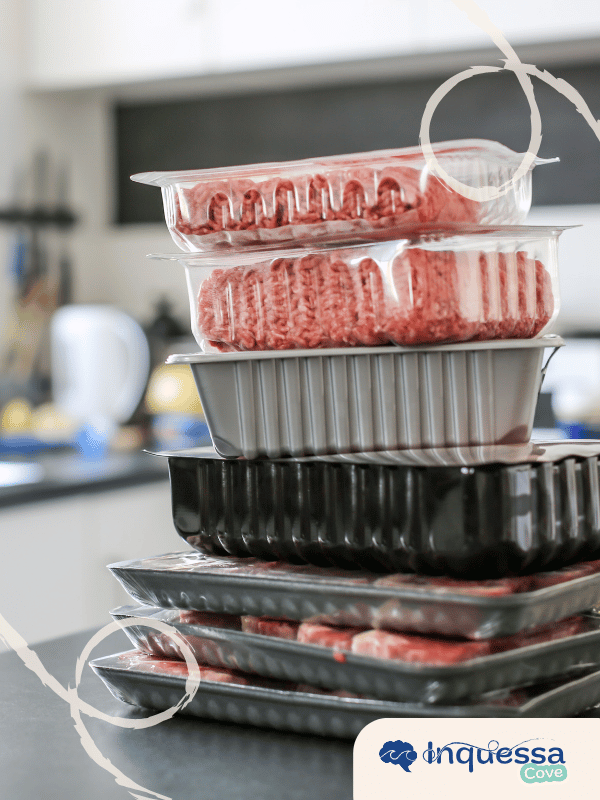
Food packages are designed for particular conditions. A wrapper may keep food clean. A tray may hold meat. A container may carry takeout food.
The material and design depend on what the package needs to protect and how it will be used.
Containers, Storage, and Reuse
A product’s intended purpose is the job it was designed to do. Takeaway plastic containers can be suitable for holding food for their immediate intended use, but they are not designed for repeated food storage.
This does not mean every takeaway container is dangerous. It means a container made for one short-term job should not automatically be treated like a reusable storage container.
Heat and Food Contact
Heat exposure means a material is exposed to higher temperatures. Heat can affect plastic differently from cool storage.
Meat and poultry packaging should be microwaved only when the package specifically directs it, and that packaging should be used for heating only once. Labels and instructions help show whether a package was designed for heating.
Why Contact Raises Questions
Scientists study what can move from food-contact materials into food and how conditions such as heat, time, or damage may matter.
The practical idea is to use packaging and containers for the jobs they were designed to do. Food contact is common, but intended use still matters.
Food and Plastic Meet Often
Food often touches plastic long before it reaches a plate. Packaged snacks sit inside wrappers, drinks are stored in bottles, and lunches may be carried in plastic containers. Food contact occurs when food touches packaging, containers, tools, or other materials during storage, cooking, or eating.
That contact can happen during storage, transport, preparation, or eating. The conditions also change from one situation to another. A cold drink stored in a bottle is not experiencing the same kind of contact as hot food placed in a takeout container.
Packaging Around Food
Plastic packaging is used because it can protect food, keep products together, and make storage or transport easier. Cling film, wrappers, bottles, trays, and takeout boxes all create surfaces that food may touch.
The type of contact depends on how the packaging is used. A sealed snack may stay in its wrapper for weeks, while a takeaway meal may stay in its container for only a short time. These differences matter because packaging is designed for particular foods and conditions rather than one identical use.
Containers, Storage, and Reuse
The intended purpose of packaging is the use it was designed for. In other words, using it differently may create different conditions. A reusable lunch container, for example, is made for a different pattern of use from a disposable takeaway box.
Takeaway plastic containers may be suitable for their immediate intended use, but they are not designed for repeated food storage. Reusing a container again and again may expose it to conditions that were not part of its original design. A container that looks sturdy is not automatically meant to be used like a reusable storage container.
Heat and Food Contact
Temperature can change the conditions of food contact. When a material comes into contact with high temperatures, it is called heat exposure.
Heating food in plastic can create different conditions from storing the same food cold. Meat and poultry packaging should be microwaved only when the package says it is safe to do so. That packaging should be used for heating only once. Packaging that works well for storing food in a refrigerator may not be designed for microwave temperatures.
Why Contact Raises Questions
Plastic touching food does not automatically mean the food is unsafe. At the same time, not all plastics or uses are the same. The type of container, the length of contact, temperature, storage conditions, and whether an item is being reused can all change the situation.
These differences are why scientists and food-safety agencies pay attention to how plastic is used around food. Everyday contact includes many ordinary situations, from a drink bottle to a takeout box, rather than one single kind of exposure. Understanding those conditions helps explain why directions for storage, reuse, and heating can differ from one plastic product to another.
Food and Plastic Meet Often
Food often touches plastic long before it reaches a plate. Packaged snacks sit inside wrappers, drinks are stored in bottles, and lunches may be carried in plastic containers. Food contact occurs when food directly touches packaging, containers, tools, equipment, or other materials during use.
That contact can happen during storage, transport, preparation, or eating. The conditions also change from one situation to another. A cold drink stored in a bottle is not experiencing the same kind of contact as hot food placed in a takeout container.
Packaging Around Food
Plastic packaging is used because it can protect food, keep products together, and make storage or transport easier. Cling film, wrappers, bottles, trays, and takeout boxes all create a surface that food may touch.
The type of contact depends on how the packaging is used. A sealed snack may remain in its wrapper for weeks, while a takeaway meal may stay in its container for only a short time. These differences matter because packaging is designed around particular foods and conditions rather than one identical use.
Containers, Storage, and Reuse
Plastic products have an intended purpose. In other words, they are designed for particular conditions and patterns of use. A reusable lunch container, for example, is made for a different pattern of use from a disposable takeaway box.
Takeaway plastic containers can be suitable for holding food for their immediate intended use, but they are not designed for repeated food storage. Reusing a container again and again may expose it to conditions that were not part of its original design. This is why a container that looks sturdy is not automatically meant to be used in the same way as a reusable storage container.
Heat and Food Contact
Temperature can change the conditions of food contact. A situation in which a material or product comes into contact with elevated temperatures is called heat exposure.
Heating food in plastic can involve very different conditions from storing the same food cold. Meat and poultry packaging should be microwaved only when the package specifically directs it, and that packaging should be used for heating only once. Packaging that works well for storing food in a refrigerator may not be designed for microwave temperatures.
Following the way a container or package was designed to be used helps keep these different conditions clear.
Why Contact Raises Questions
Plastic touching food does not automatically mean the food is unsafe. At the same time, not all plastics or uses are identical. The type of container, the length of contact, temperature, storage conditions, and whether an item is being reused can all change the situation.
These differences are why scientists and food-safety agencies pay attention to how plastic is used around food. Everyday contact includes many ordinary situations, from a drink bottle to a takeout box, rather than one single kind of exposure. Understanding those conditions helps explain why directions for storage, reuse, and heating can differ from one plastic product to another.
Food and Plastic Meet Often
Food often touches plastic long before it reaches a plate. Packaged snacks sit inside wrappers, drinks are stored in bottles, and lunches may be carried in plastic containers. Food contact occurs when food directly touches packaging, containers, tools, equipment, or other materials during use.
That contact can happen during storage, transport, preparation, or eating. The conditions also vary from one situation to another. A cold drink stored in a bottle, for example, is not experiencing the same kind of contact as hot food placed in a takeout container.
Packaging Around Food
Plastic packaging is used because it can protect food, keep products together, and make storage or transport easier. Cling film, wrappers, bottles, trays, and takeout boxes all create surfaces that food may touch.
The type of contact depends on how the packaging is used. A sealed snack may remain in its wrapper for weeks, while a takeaway meal may stay in its container for only a short time. These differences matter because packaging is designed for particular foods and conditions rather than one identical pattern of use.
Containers, Storage, and Reuse
Plastic products have an intended purpose, meaning they are designed for particular jobs and conditions. A reusable lunch container, for example, is made for a different pattern of use from a disposable takeaway box.
Takeaway plastic containers can be suitable for holding food for their immediate intended use; however, they are not designed for repeated food storage. Reusing a container again and again may expose it to conditions that were not part of its original design. Therefore, a container that looks sturdy is not automatically intended to be used in the same way as a reusable storage container.
Heat and Food Contact
Temperature can change the conditions of food contact. Heat exposure occurs when a material or product comes into contact with elevated temperatures.
Heating food in plastic can involve very different conditions from storing the same food cold. Meat and poultry packaging should be microwaved only when the package specifically directs it, and that packaging should be used for heating only once. Packaging that works well for storing food in a refrigerator may not be designed for microwave temperatures.
Following the way a container or package was designed to be used helps keep these different conditions clear.
Why Contact Raises Questions
Plastic touching food does not automatically mean the food is unsafe. However, not all plastics, containers, or uses are identical. The type of material, length of contact, temperature, storage conditions, and whether an item is being reused can all change the situation.
These differences are why scientists and food-safety agencies pay attention to how plastic is used around food. Everyday food contact includes many ordinary situations, from a drink bottle to a takeout box, rather than one single type of exposure. Understanding those conditions helps explain why directions for storage, reuse, and heating can differ from one plastic product to another.
Key Vocabulary
packaging (noun) Material used to contain, protect, store, or transport a product. (wrapping, container)
cling film (noun) A thin flexible plastic film used to cover or wrap food. (plastic wrap, food film)
takeaway container (noun) A container used to hold prepared food that is taken away from where it was made. (takeout box, food container)
reusable container (noun) ♻️ A container designed to be used many times. (storage container, repeat-use container)
disposable (adjective) ️ Designed to be used for a short time and then discarded. (single-use, throwaway)
storage conditions (noun) ️ The temperature, time, and surroundings in which food or a container is kept. (storage environment, keeping conditions)
refrigerator (noun) ❄️ An appliance that keeps food cold to slow spoilage. (fridge, cold storage)
microwave (verb) To heat or cook food using a microwave oven. (heat, reheat)
temperature (noun) ️ A measure of how hot or cold something is. (heat level, degree of heat)
contact time (noun) ⏱️ The amount of time food remains touching a material or container. (contact period, duration)
surface (noun) ️ The outer part of a material that may come into contact with food. (outer layer, exterior)
instruction (noun) ️ Information explaining how a product should be used. (direction, guidance)
sturdy (adjective) Strong or solid enough to seem durable. (strong, robust)
