
Microplastics: Tiny Plastic That Travels
About this Article
Lines of Inquiry
- How plastic changes from larger objects into particles that are much harder to see and manage.
- The many sources, shapes, and pathways of microplastics.
- Connections between particle size and the movement of plastic through environmental systems.
Guiding Questions
- How does becoming smaller change what happens to plastic in the environment?
- Why can microplastics come from many different products and activities?
- How does the size of microplastics make them harder to find and remove?
Microplastics: Tiny Plastic That Travels
Plastic Too Small to Notice Easily
Plastic does not have to be large to stay in the environment. Microplastics are tiny pieces or fibers of plastic.
Microplastics are not a special kind of plastic. Some are made small from the start. Others form when larger plastic breaks apart.
Sunlight, waves, weather, rubbing, and wear can break plastic into smaller pieces. Being tiny does not mean the plastic has disappeared.
How Small Is Microplastic?
Five millimeters is used as the upper size limit for microplastics.
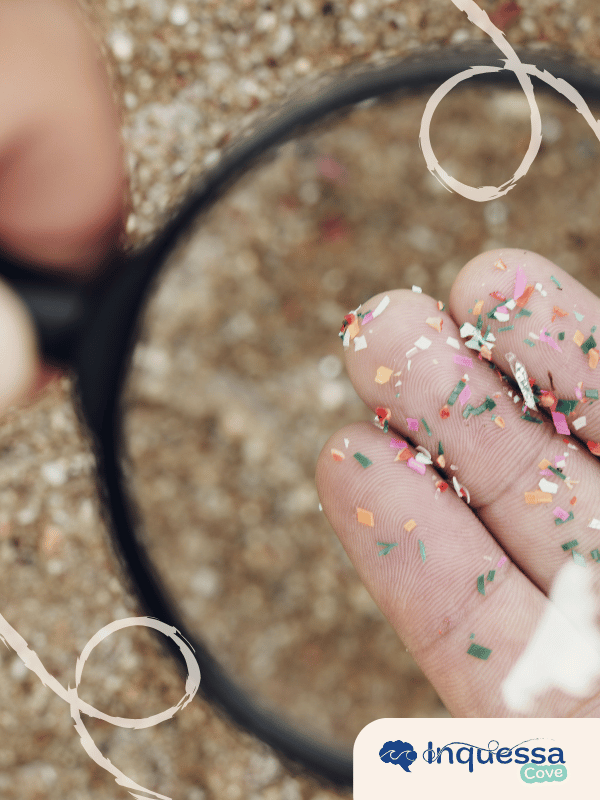
Microplastics are plastic pieces or fibers smaller than 5 millimeters. That is about the size of a pencil eraser or smaller.
Some pieces can still be seen. Others are much harder to notice. A bottle or bag may be easy to spot, but tiny plastic pieces can be overlooked.
Pieces, Fibers, and Fragments
Microplastics can come from many sources. These include tires, synthetic clothing, road markings, coatings, personal care products, plastic pellets, and city dust.
They can also have different shapes.
Plastic fibers are thin strands made from plastic, such as fibers used in some clothing.
Fragments, or small broken pieces, can form when larger plastics break apart.
Microplastics are not all the same shape or from the same source.
Why Size Changes the Problem
Small size changes where plastic can travel. Microplastics can move through water, soil, air, and living systems.
Larger trash can sometimes be picked up by hand or with equipment. Tiny plastic is much harder to collect after it spreads.
Tiny plastic pieces are extremely difficult to remove after they spread through the environment. Some may remain there for a very long time.
Microplastics may be easy to miss, but they can keep moving even when people cannot see them.
Plastic Too Small to Notice Easily
Plastic does not have to be large enough to see clearly to remain in the environment. Microplastics are very small plastic particles, usually smaller than five millimeters. They are not a special kind of plastic. They are pieces or fibers that were made small or became small over time.
Sunlight, waves, weather, and wear can break larger plastic into smaller pieces and create more microplastics. Once plastic reaches this size, it can be difficult to notice. Being tiny does not mean it has disappeared.
How Small Is Microplastic?
Five millimeters is very small, but it marks the upper size limit for microplastics. Some pieces can be seen without special equipment, while others are much harder to notice.
Microplastics are plastic pieces or fibers smaller than 5 millimeters. That is about the size of a pencil eraser or smaller. A person may easily notice a bottle, bag, or wrapper on the ground, but tiny pieces of plastic can be much harder to see.
Pieces, Fibers, and Fragments
Microplastics come from many different materials and activities. Seven major sources of primary microplastics include tires, synthetic textiles, road markings, marine coatings, personal care products, plastic pellets, and city dust. Some begin as tiny particles, while others form when larger plastic objects break apart.
Microplastics also come in different shapes. Plastic fibers, such as polyester strands in clothing, are thin pieces of synthetic material made from plastic-based polymers. Fragments, or small pieces broken from larger plastic items, are another type of microplastic. Microplastics are not all tiny beads or crumbs. Their shapes and sources can be very different.
Why Size Changes the Problem
Size changes where plastic can travel. Because microplastics are so small, they can spread through water, soil, air, and parts of living systems. Their small size also makes cleanup difficult once they have spread.
Tiny plastic pieces are extremely difficult to remove from the environment. Some may never fully go away. Larger trash can sometimes be picked up by hand or with equipment, but microplastics may be scattered across large areas or mixed into water, soil, and other materials.
Their small size is therefore an important part of the problem. Microplastics may be easy to overlook, but they can keep moving through the environment even when people cannot see them.
Plastic Too Small to Notice Easily
Plastic does not have to be large enough to see clearly to remain in the environment. Microplastics are plastic particles smaller than five millimeters. They are not a special type of plastic. Instead, they are pieces or fibers that are tiny because they were made small or became small over time.
Sunlight, waves, weather, friction, and wear can break larger plastic items into additional microplastics. Once plastic reaches this size, it may be difficult to notice. Being tiny does not mean it has disappeared.
How Small Is Microplastic?
Five millimeters is a very small measurement, but it marks the upper size limit used to define microplastics. Some pieces can be seen without special equipment, while others are much harder to notice.
Microplastics are defined as plastic pieces or fibers smaller than 5 millimeters, about the size of a pencil eraser or smaller. That comparison helps show how easily these particles can be overlooked. A person might notice a bottle, bag, or wrapper on the ground, but tiny plastic pieces can be much less obvious even when many are present.
Pieces, Fibers, and Fragments
Microplastics can come from many different materials and activities. Microplastics can come from many sources, including tires, synthetic clothing, road markings, coatings, personal care products, plastic pellets, and city dust. Some begin as very small particles, while others form when larger plastic objects break apart.
They also come in different shapes. Plastic fibers are thin synthetic strands made from polymers, such as polyester fibers used in clothing and textiles. Fragments, or small broken pieces, form when larger plastic items crack and break apart. Microplastics are therefore not just tiny beads or crumbs. Their shapes and sources can vary widely.
Why Size Changes the Problem
Size changes what plastic can do and where it can go. Because microplastics are so small, they can move through water, soil, air, organisms, and other connected environmental systems. A particle that is difficult to see can also be difficult to collect once it has spread.
Tiny plastic pieces are extremely difficult to remove once they spread through the environment, and some may remain there for a very long time. Larger trash can sometimes be picked up by hand or collected with equipment. Microplastics are harder to manage because they may be scattered through large areas or mixed into water, soil, and other materials.
Their small size is therefore a major part of the problem. Microplastics may be easy to overlook, but they can continue moving through the environment even when people cannot see them.
Plastic Too Small to Notice Easily
Plastic does not have to remain large to persist in the environment. Microplastics are plastic particles measuring less than five millimeters, including fragments from larger plastics and particles produced at very small sizes. They are not a separate kind of plastic, but plastic that exists at a very small scale.
Sunlight, waves, weather, friction, and wear can cause larger plastic items to crack and fragment over time. As these materials become smaller, they may be much harder to notice even though the plastic itself has not disappeared.
How Small Is Microplastic?
Five millimeters marks the upper size limit for microplastics. Some particles near that limit can still be seen without special equipment, while smaller ones may be much more difficult to detect.
Plastic pieces or fibers measuring less than 5 millimeters are classified as microplastics, with the largest pieces being about the size of a pencil eraser. A bottle, bag, or wrapper may be easy to notice on the ground, but particles at this scale can be overlooked even when many are present.
Pieces, Fibers, and Fragments
Microplastics can enter the environment through many materials and activities. Rather than coming from one kind of product, microplastics can originate from tires, synthetic clothing, road markings, coatings, personal care products, plastic pellets, city dust, and other sources. Some begin at a very small size, while others form gradually as larger plastic items wear down.
Their shapes also vary. Plastic fibers are thin synthetic strands made from polymer-based materials and can come from clothing and other textiles. Microplastics can also include fragments, or irregular pieces produced as larger plastic objects break down physically.
This variety matters because microplastics are not limited to one shape or one source. Fibers, fragments, and other tiny particles can all be part of the same wider problem.
Why Size Changes the Problem
Once plastic becomes very small, its movement and management change. Microplastics can travel through water, soil, air, organisms, and other connected environmental systems, while their size makes them difficult to track and collect.
Once these tiny pieces become widely dispersed through the environment, removing them is extremely difficult, and some may remain there for a very long time. Larger pieces of trash can sometimes be collected directly, but microplastics may already be scattered across wide areas or mixed into water, soil, dust, and other materials.
Their small size therefore affects both where microplastics can travel and how difficult they are to manage once they spread.
Key Vocabulary
particle (noun) A very small piece of a material. (tiny piece, speck)
synthetic (adjective) Made by people through chemical or industrial processes rather than occurring naturally in that form. (human-made, manufactured)
polymer (noun) A material made of very long molecules built from repeating smaller parts. (long-chain material)
friction (noun) A force created when two surfaces rub against each other. (rubbing, resistance)
dispersed (adjective) ️ Spread out over a wide area rather than gathered in one place. (scattered, spread)
environment (noun) The surroundings and conditions in which living and nonliving things exist. (surroundings, natural world)
coating (noun) A thin layer of material covering a surface. (covering, layer)
pellet (noun) ⚪ A small, rounded piece of material, including tiny pieces of plastic used to make plastic products. (small piece, bead)
