
From Raw Material to Plastic Product
About this Article
Lines of Inquiry
- How plastic moves through several manufacturing stages before becoming a finished product.
- Why plastic pellets are useful as a bridge between processed plastic material and shaped objects.
- How molds, machines, workers, and design choices work together during manufacturing.
Guiding Questions
- Why do factories often use plastic pellets instead of shaping products directly from earlier raw materials?
- How does a mold affect the size, shape, and features of a finished plastic part?
- Why is manufacturing better understood as a sequence of controlled steps rather than one single action?
From Raw Material to Plastic Product
From Raw Material to Plastic Material
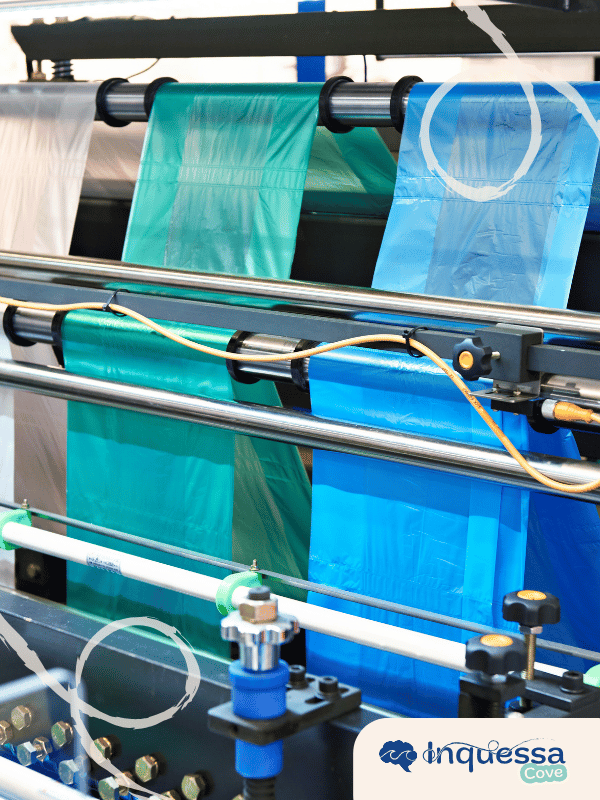
Inside a plastic factory, materials begin changing into forms that machines can shape into products. Manufacturing is the process of turning raw or processed materials into finished or partly finished products.
Plastic manufacturing usually happens in several stages. Material may be prepared, made into small pieces, heated, shaped, and sometimes joined with other parts. Each stage moves the material closer to becoming a bottle, toy, pipe, container, or package.
Factories use machines, energy, workers, and careful designs to control these changes. The goal is to make products with the right size, shape, and features.
Making Plastic Pellets
One important stage creates plastic pellets, small pieces of raw plastic used to make products. These pellets are not usually products that people buy. Factories use them because they are easy to measure, move, heat, and reshape.
Plastic pellets, called nurdles, are small pieces of plastic used as raw material for making plastic products. They may look like tiny beads or grains. A factory can use large numbers of pellets to make many different objects.
Plastic pellets form a bridge between processed plastic material and the finished products people recognize.
Heating and Shaping Plastic
Factories often heat plastic until it becomes soft enough to shape. Molding is the process of shaping heated plastic inside a mold and then letting it cool.
A mold is a hollow form that gives softened plastic a particular shape. When the plastic cools, it becomes firm enough to keep that shape.
Different molds can make very different objects. The basic process is simple: plastic is softened, shaped, and cooled into a useful form.
Molds, Machines, and Product Design
Machines help control how much plastic goes into a mold and how the plastic is shaped. The mold itself must be carefully designed because it controls features such as size, thickness, edges, and openings.
In injection molding, melted plastic is pushed into a mold. It cools inside the mold and is then released as a finished part.
LEGO bricks are a familiar example. Tiny plastic grains are melted and pushed into carefully shaped molds. A standard 2×4 LEGO brick uses only about 2.3 grams of plastic. Once the plastic cools, the finished brick is released from the mold.
Machines can repeat this process many times to make large numbers of matching parts. Some products are made as one piece. Others have several pieces that are joined together later.
From Factory Product to Everyday Object
By the end of manufacturing, plastic has passed through several stages. It may begin as processed material, become pellets, and then be heated and shaped into a finished product or part.
A bottle, toy, pipe, or package may look simple when it reaches a store, school, home, or workplace. Behind it is a series of factory steps involving materials, machines, molds, workers, and design choices.
Manufacturing connects raw materials with the finished plastic objects people use every day. By the time we see the final product, many controlled steps have already happened.
From Raw Material to Plastic Material
Inside a plastic factory, raw or processed materials begin changing into forms that machines can shape into products. The organized process of turning materials into finished or partly finished products is called manufacturing. Plastic manufacturing develops through several stages, including preparing material, shaping components, assembling parts, and finishing products.
Manufacturing forms part of a larger production system connecting raw materials, machinery, labor, energy, factories, and distribution. Factories use machines, energy, and workers to control these changes so products have the size, shape, and features they need.
Making Plastic Pellets
Plastic pellets, small plastic pieces used in manufacturing, are a common starting material for many plastic products. Pellets are not usually products that people buy or use. Instead, they are easy for factories to handle, measure, move, and reshape.
Plastic pellets, also called nurdles, are small plastic granules widely used as raw material for plastic products. They may look like tiny beads or grains. Factories can use large numbers of these pellets to make many different objects.
Pellets create a bridge between processed plastic material and the finished products people recognize.
Heating and Shaping Plastic
Plastic can be heated until it can be shaped, placed into a mold, and cooled into a finished form. This process is called molding.
A mold is a hollow form that gives softened plastic a certain shape. Once the plastic cools, it becomes firm enough to keep that form. Different molds can create very different objects, from containers and toys to parts used inside larger products.
The main idea is simple: plastic is softened, shaped, and cooled into a useful form.
Molds, Machines, and Product Design
Factories use machines to control how much plastic enters a mold and how it is shaped. The mold itself is carefully designed because it controls features such as size, thickness, edges, and openings.
In injection molding, melted plastic is pushed into a mold, cooled, and released as a finished part. LEGO bricks are a familiar example. Tiny plastic grains are melted and pushed into carefully shaped molds. A standard 2×4 LEGO brick uses only about 2.3 grams of plastic. Once it cools, the finished brick is released from the mold.
A machine can repeat this process many times to make large numbers of matching parts. Some products are made as one piece, while others have several parts that are joined later.
From Factory Product to Everyday Object
By the end of manufacturing, plastic has moved through several stages. It may begin as processed material, become pellets, and then be heated and shaped into a product or product part.
A bottle, toy, pipe, or package may look simple when it reaches a store, school, home, or workplace. Behind that object is a series of factory steps involving materials, machines, molds, workers, and design choices.
Manufacturing connects raw materials with the finished plastic objects people use every day. By the time we see the final object, many carefully controlled production steps have already taken place.
From Raw Material to Plastic Material
Inside a plastic factory, raw or processed materials begin changing into forms that machines can shape into products. The organized process of turning raw or processed materials into finished or partly finished products is called manufacturing.
Plastic manufacturing usually happens through several stages rather than one simple step. Material may be prepared, formed into small pieces, heated, shaped, and sometimes assembled with other parts. Each stage moves the plastic closer to the bottle, toy, pipe, container, or package it will eventually become.
Factories use machines, energy, and workers to control these changes so products have the size, shape, and features they need.
Making Plastic Pellets
One important stage produces plastic pellets, small pieces of raw plastic used to make products. Pellets are not usually products that people buy or use. Instead, they are a convenient form of plastic that factories can handle, measure, move, and reshape.
Plastic pellets, also called nurdles, are small plastic granules widely used as raw material for plastic products. They may look like tiny beads or grains. Factories can use large numbers of these pellets as the starting material for many different objects.
Pellets create a bridge between processed plastic material and the finished products people recognize.
Heating and Shaping Plastic
Factories often heat plastic until it becomes soft enough to shape. The process of shaping heated plastic inside a mold and allowing it to cool is called molding.
A mold is a hollow form that gives softened plastic a particular shape. Once the plastic cools, it becomes firm enough to keep that form. Different molds can create very different objects, from containers and toys to parts used inside larger products.
The main idea is simple: plastic material is softened, formed, and cooled into a useful shape.
Molds, Machines, and Product Design
Factories use machines to control how much plastic enters a mold and how it is shaped. The mold itself is carefully designed because it determines features such as size, thickness, edges, and openings.
In injection molding, melted plastic is pushed into a mold, cooled, and then released as a finished part. LEGO bricks are a familiar example. Tiny plastic grains are melted and pushed into carefully shaped molds. A standard 2×4 LEGO brick uses only about 2.3 grams of plastic. Once it cools, the finished brick is released from the mold.
A machine can repeat this process many times to make large numbers of matching parts. Some products are made as one piece, while others have several parts that are later joined together.
From Factory Product to Everyday Object
By the end of manufacturing, plastic has moved through several stages. It may begin as processed material, become pellets, and then be heated and shaped into a product or product part.
A bottle, toy, pipe, or package may look simple when it reaches a store, school, home, or workplace. Behind that object is a sequence of factory steps involving materials, machines, molds, workers, and design choices.
Manufacturing connects raw materials with the finished plastic objects people use every day. By the time we see the final object, many carefully controlled production steps have already taken place.
From Raw Material to Plastic Material
Inside a plastic factory, raw or processed materials begin changing into forms that machines can shape into products. Manufacturing is the organized process of turning raw or processed materials into finished or partly finished products.
Plastic manufacturing usually happens through several stages rather than one simple step. Material may be prepared, formed into small pieces, heated, shaped, cooled, and sometimes joined with other parts. Each stage moves the material closer to the bottle, toy, pipe, container, package, or component it will eventually become.
Factories use machinery, energy, workers, and controlled production steps to make sure products have the size, shape, and features required by their designs.
Making Plastic Pellets
Many manufacturing systems use plastic pellets, small pieces of raw plastic that factories can handle, measure, transport, heat, and reshape.
Plastic pellets, also called nurdles, are small plastic granules widely used as raw material before plastic is shaped into finished products. They may resemble tiny beads or grains and are not usually products that consumers buy or use directly.
Factories can combine large numbers of these pellets as the starting material for many different objects. Their small, regular form makes them easier to measure and feed into manufacturing equipment.
Pellets therefore act as a practical bridge between processed plastic material and the finished products people recognize.
Heating and Shaping Plastic
Factories often heat plastic until it becomes soft enough to form into a new shape. Molding is the process of shaping softened or melted plastic inside a mold so it forms a finished object or part.
A mold is a hollow form designed to give plastic a particular shape. Once the material fills that form and cools, it becomes firm enough to keep the shape.
Different molds can create very different products, from containers and toys to components used inside larger objects. The basic sequence remains similar: plastic is softened, shaped, cooled, and released.
Molds, Machines, and Product Design
Machines control how much plastic enters a mold and how the material is distributed. The mold itself must also be carefully designed because its form determines details such as thickness, edges, openings, and overall dimensions.
Injection molding shapes plastic by pushing melted material into a mold, where it cools and hardens before the finished part is released.
LEGO bricks provide a familiar example. Tiny plastic grains are melted and pushed into precisely shaped molds. A standard 2×4 LEGO brick uses only about 2.3 grams of plastic. Once the plastic cools, the finished brick is released from the mold.
A machine can repeat the same process many times, producing large numbers of matching parts. Some products emerge from manufacturing as a single piece, while others are assembled from several separately made parts.
From Factory Product to Everyday Object
By the end of manufacturing, plastic may have passed through several controlled stages. It can begin as processed material, become pellets, and then be heated, shaped, cooled, and sometimes assembled with other components.
A finished bottle, toy, pipe, or package may look simple when it reaches a store, school, home, or workplace. Behind that object is a sequence involving materials, machines, molds, workers, energy, and design choices.
Manufacturing connects processed plastic material with the recognizable products people use every day. By the time the finished object appears, many carefully controlled production steps have already taken place.
Key Vocabulary
processed material (noun) ⚙️ A material that has already been changed or prepared before becoming a finished product. (prepared material, treated material)
factory (noun) A place where products are made using machines, workers, and organized processes. (manufacturing site, plant)
machinery (noun) ⚙️ Machines used together to carry out manufacturing work. (equipment, machines)
granule (noun) ⚪ A very small grain or piece of material. (tiny grain, pellet)
reshape (verb) To change something into a different shape. (reform, shape again)
mold (noun) A hollow form that gives softened material a particular shape. (form, shaping tool)
softened (adjective) Made less hard so a material can be shaped more easily. (made flexible, made pliable)
injection molding (noun) A manufacturing process that pushes melted plastic into a mold, where it cools into a finished shape. (molding process)
assemble (verb) To join separate parts together to make a finished object. (put together, build)
component (noun) One part of a larger product or system. (part, piece)
dimensions (noun) Measurements such as length, width, height, or thickness. (measurements, size)
production step (noun) ️ One stage in the sequence used to manufacture a material or product. (manufacturing stage, process step)
