
Companies Shape Plastic Choices
About this Article
Lines of Inquiry
- The role of company decisions in shaping how much plastic is used before products ever reach shoppers.
- Connections among packaging design, marketing, portion size, shipping, and product protection.
- Responsibility for reducing plastic earlier in the system while still meeting safety, storage, and transport needs.
Guiding Questions
- Which plastic choices have already been made before a shopper sees a product?
- How can changing a package affect plastic use across millions of products?
- Why can’t companies simply remove all packaging from every product?
Companies Shape Plastic Choices
Choices Made Before the Shelf
By the time shoppers see a product, many decisions about its plastic have already been made. Company influence means the ways businesses can affect the choices people have.
Companies choose materials, packaging sizes, shapes, durability, shipping needs, and reuse options before products reach stores. These choices can affect how much plastic is used.
Plastic problems are often noticed after products become waste. Upstream innovation makes changes earlier, before products reach shoppers or become waste. A company might reduce plastic by changing a package, offering a refill system, or removing material that is not needed.
Packaging Design and Materials
Companies decide how products are packaged. A package might use one simple material or several materials joined together. Companies also choose colors, lids, labels, and shapes.
A corporate plastic footprint, plastic linked to a company, includes its products and packaging. The world’s ten largest fast-moving consumer goods companies use more than 10 million metric tons of plastic packaging each year.
Because these companies sell huge numbers of everyday products, even small packaging changes can affect very large amounts of plastic. At this scale, one design choice can affect millions of packages.
Marketing, Portions, and Convenience
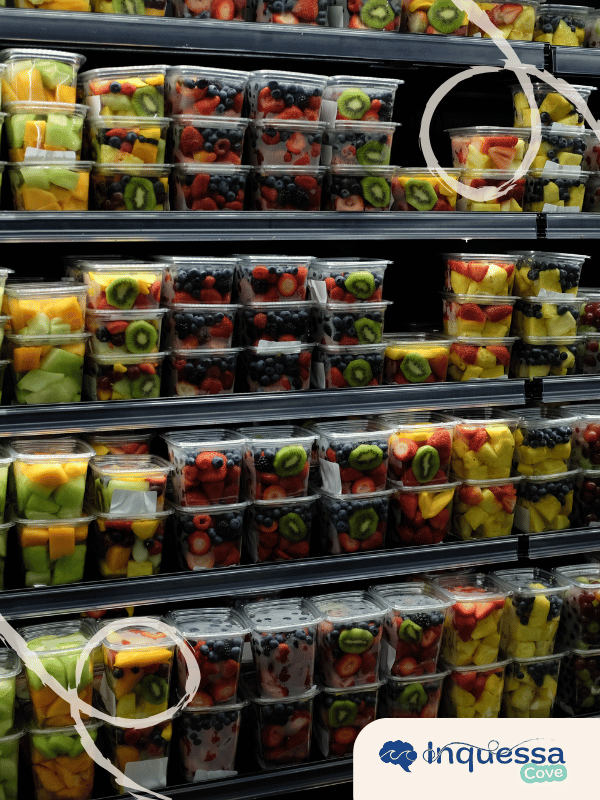
Packaging does more than protect a product. It can also make products easier to carry, divide them into portions, or help them stand out on a shelf.
These choices can change how much packaging is used. Selling one product in several small portions may need more separate wrappers than selling it in one larger package. Extra plastic pieces can also increase material use.
Companies therefore influence plastic use through both the material they choose and the way products are sized and sold.
Shipping and Product Protection
Products need to survive storage and transportation. Packaging can protect them from damage, leaks, dirt, or moisture while they travel from factories to warehouses and stores.
Companies need to think about these jobs when reducing plastic. Removing too much packaging could damage a product. A better design might use less material while still keeping the product safe.
The size, shape, strength, and shipping needs of a product can all affect which packaging choices work.
How Companies Can Redesign Choices
Companies can change plastic use before consumers make a purchase. They might remove unnecessary packaging, use simpler materials, create refill systems, or design containers to be used again.
Concentrated refills contain a smaller amount of a strong product that can be mixed or used to refill another container. A concentrated cleaning refill is one example. This can reduce the amount of product and packaging that needs to be transported.
Not every product can be redesigned in the same way. Different products have different safety, storage, protection, and transport needs. Even so, company decisions help shape how much plastic eventually reaches shoppers.
Choices Made Before the Shelf
By the time shoppers see a product, many decisions about its plastic have already been made. Company influence is the effect businesses have on products, choices, and systems through the decisions they make. Materials, packaging size, durability, shipping needs, and reuse options can all be chosen before an item reaches a store.
Upstream innovation changes materials, packaging, or product design before an item reaches consumers or becomes waste. A company can reduce plastic earlier by changing a package, offering reuse options, or removing unnecessary material. These decisions happen before shoppers ever see the product.
Packaging Design and Materials
Companies decide whether a product comes in a simple container, a package made from several materials, or extra layers of wrapping. They can also choose colors, lids, labels, and shapes that affect how much plastic is used.
A corporate plastic footprint, plastic impacts linked to a company, can reflect choices about products and packaging. The world’s ten largest fast-moving consumer goods companies use more than 10 million metric tons of plastic packaging each year. Because these companies sell huge numbers of everyday products, even small packaging changes can affect very large amounts of plastic. At that scale, decisions about materials and package design can shape plastic use across millions of products.
Marketing, Portions, and Convenience
Packaging does more than hold a product. Companies also use it to create different portion sizes, make items easy to carry, and help products stand out to shoppers.
Those decisions can change how much packaging is needed. Selling one product in several small portions may require more wrappers or containers than another design. Adding unnecessary plastic extras can increase material use too. Companies therefore influence plastic use not only by choosing the material, but also by deciding how products are sized, presented, and sold.
Shipping and Product Protection
Products need to survive storage and transportation. Packaging may protect an item from damage, leaks, dirt, or moisture while it moves from a factory to a warehouse and then to a store.
Companies need to consider these practical jobs when reducing plastic. Removing packaging without thinking about protection could lead to damaged products. Redesigning a package, however, might use less material without losing its function. Product size, shape, strength, and shipping method can all affect which packaging choices are practical.
How Companies Can Redesign Choices
Companies can change plastic use in several ways before consumers make a purchase. They might remove unnecessary packaging, simplify materials, offer refill systems, or redesign products so the same container can be used repeatedly.
Concentrated refills contain a strong product in a smaller package. For example, a concentrated cleaner can be mixed with water in a reusable bottle. This can reduce the amount of product and packaging that needs to be transported.
Companies cannot change every product in exactly the same way. Different goods have different safety, protection, transport, and storage needs. However, the choices businesses make during design and production help determine which plastic options eventually reach shoppers.
Companies Shape Plastic Choices
Choices Made Before the Shelf
By the time shoppers see a product, many decisions about its plastic have already been made. Company influence is the effect businesses have on products, consumer options, and wider systems through the decisions they make. Materials, packaging size, durability, shipping needs, and reuse options can all be chosen before an item reaches a store.
Many plastic problems become visible after products are used, but changes made earlier in materials, packaging, or product design are upstream innovation. A company can reduce plastic before it becomes waste by changing how a package is designed, offering reuse options, or removing unnecessary material. These decisions happen before shoppers ever see the product.
Packaging Design and Materials
Companies decide whether a product comes in a simple container, a package made from several materials, or extra layers of wrapping. They can also choose colors, lids, labels, and shapes that affect how much plastic is used.
A corporate plastic footprint, plastic linked to a company’s activities, can include its products and packaging. The world’s ten largest fast-moving consumer goods companies use more than 10 million metric tons of plastic packaging each year. Because these companies sell huge numbers of everyday products, even small packaging changes can affect very large amounts of plastic. At that scale, decisions about materials and package design can shape plastic use across millions of products.
Marketing, Portions, and Convenience
Packaging does more than hold a product. Companies also use it to create different portion sizes, make items convenient to carry, and help products stand out to shoppers.
Those decisions can change how much packaging is needed. Selling one product in several small portions may require more separate wrappers or containers than another design. Adding unnecessary plastic extras can increase material use as well. Companies therefore influence plastic use not only by choosing the material itself, but also by deciding how products are sized, presented, and sold.
Shipping and Product Protection
Products also need to survive storage and transportation. Packaging may protect an item from damage, leaks, dirt, or moisture while it moves from a factory to a warehouse and then to a store.
Companies must consider these practical jobs when reducing plastic. Removing packaging without considering protection could lead to damaged products, while redesigning a package might use less material without losing its function. Product size, shape, strength, and shipping method can all affect which packaging choices are practical.
How Companies Can Redesign Choices
Companies can change plastic use in several ways before consumers ever make a purchase. They might remove unnecessary packaging, simplify materials, offer refill systems, or redesign products so the same container can be used repeatedly.
Concentrated refills reduce the amount of product and packaging that must be transported by supplying a stronger formula that can be diluted or transferred later. A concentrated cleaner, for example, can be placed into a reusable bottle rather than requiring a new full-size container each time.
Companies cannot change every product in exactly the same way. Different goods have different safety, protection, transport, and storage needs. However, the choices businesses make during design and production help determine which plastic options eventually reach shoppers.
Choices Made Before the Shelf
By the time shoppers see a product, many decisions about its plastic use have already been made. Company influence is the effect businesses have on products, consumer options, and wider systems through the decisions they make. Materials, package size, durability, shipping needs, and reuse options can all be determined before an item ever reaches a store.
Many plastic problems become visible only after products are used, but upstream innovation changes materials, packaging, or product design earlier in the system. A company might reduce plastic before it becomes waste by redesigning a package, offering a reuse option, or removing material that is not necessary. These choices shape what consumers eventually encounter on the shelf.
Packaging Design and Materials
Companies decide whether a product is sold in a simple container, a package made from several materials, or with extra layers of wrapping. They can also choose colors, lids, labels, and shapes that affect how much plastic is used.
A corporate plastic footprint is the plastic linked to a company’s activities, including its products and packaging. The world’s ten largest fast-moving consumer goods companies use more than 10 million metric tons of plastic packaging each year. Because their products are sold on such a large scale, even small changes in packaging design can affect enormous amounts of plastic. At this scale, decisions about materials and package design can influence plastic use across millions of individual products.
Marketing, Portions, and Convenience
Packaging does more than protect what is inside. Companies may also use it to create different portion sizes, make products convenient to carry, and help items stand out to shoppers.
Those choices can affect the total amount of packaging required. Selling one product in several small portions may require more separate wrappers or containers than selling the same amount in a different format. Extra plastic features can also increase material use. Company influence therefore includes not only which material is chosen, but also how products are sized, presented, and sold.
Shipping and Product Protection
Products must also survive storage and transportation. Packaging may protect an item from damage, leaks, dirt, or moisture while it moves from a factory to a warehouse and then to a store.
This creates practical limits when companies try to reduce plastic. Removing packaging without considering its protective job could lead to damaged products, while a redesigned package might use less material and still perform the same function. Product size, shape, strength, and shipping method can all affect which changes are realistic.
How Companies Can Redesign Choices
Companies can change plastic use in several ways before consumers make a purchase. They may remove unnecessary packaging, simplify materials, offer refill systems, or redesign products so the same container can be used repeatedly.
Concentrated refills provide a stronger formula that can be diluted or transferred later, reducing the amount of product and packaging that must be transported. A concentrated cleaner, for example, can be added to a reusable bottle rather than requiring a new full-size container for every purchase.
Companies cannot redesign every product in the same way because different goods have different safety, protection, transport, and storage needs. However, decisions made during design and production help determine which plastic choices eventually become available to shoppers.
Key Vocabulary
packaging size (noun) The amount of space or material used for a product’s package. (package size, container size)
durability (noun) ️ The ability of a product or package to stay useful without breaking easily. (strength, lasting quality)
shipping needs (noun) The protection, size, strength, or other features needed to move a product safely. (transport needs, delivery requirements)
reuse option (noun) A way for a product or container to be used again instead of replaced after one use. (reusable choice, reuse system)
unnecessary material (noun) ✂️ Material that is not needed for a product to perform its main job. (extra material, excess material)
portion size (noun) The amount of a product packaged or sold as one serving or unit. (serving size, amount)
wrapper (noun) A covering placed around a product to contain or protect it. (covering, packaging)
warehouse (noun) A large building where products are stored before being sent elsewhere. (storage building, depot)
product protection (noun) ️ Packaging features that help prevent damage, leaks, dirt, or moisture from reaching a product. (protection, safeguarding)
storage (noun) Keeping products somewhere safely until they are needed or moved. (holding, keeping)
transportation (noun) The movement of products or materials from one place to another. (transport, shipping)
refill system (noun) A system that lets a container be filled again rather than replaced with a new full container. (refill option, reuse system)
reusable bottle (noun) A bottle designed to be filled and used repeatedly. (refillable bottle, repeat-use bottle)
