
Better Food Packaging: Refill, Reuse, and Redesign
About this Article
Lines of Inquiry
- How packaging can be redesigned to use less material while still protecting food.
- How refill and reuse systems depend on containers being returned, cleaned, and used repeatedly.
- How package design must connect with collection, recycling, refill, or composting systems to work effectively.
Guiding Questions
- How can designers reduce packaging without making the food less safe or protected?
- What has to happen for a refill or reuse system to work repeatedly?
- Why can simplifying the materials in a package make recycling easier without guaranteeing that recycling will happen?
Better Food Packaging: Refill, Reuse, and Redesign
Designing for the Food’s Job
Better food packaging starts with a simple question: What does the food actually need?
Some foods need protection from air or moisture. Others need a strong container for transport, a lid to stop spills, or packaging that keeps the food clean.
Good design tries to meet these needs without using more material than necessary. The goal is not always to remove packaging completely. It is to make sure the package fits the job the food needs it to do.
Less Packaging When Possible
Some food packages use more material than the food really needs. A package might include an outer box, an inner tray, and separate wrappers around smaller portions.
Removing extra layers can reduce waste before the food is even sold. This might mean using a smaller container, making a wrapper thinner, or leaving out a layer that adds very little protection.
But less packaging only works if the food can still be stored, moved, and sold safely. A package that uses less material but causes more food to spoil may not be a better design.
Refill and Reuse Systems
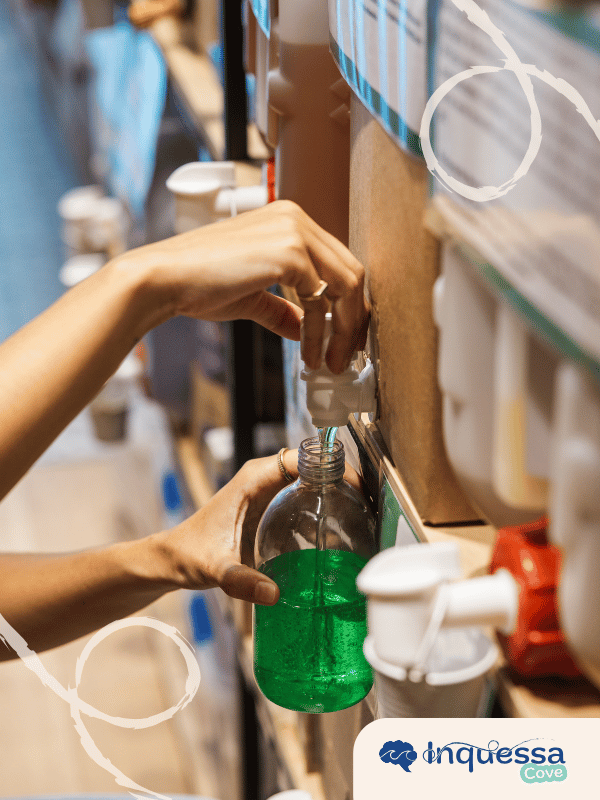
A refill means filling an existing container again instead of replacing it with a new one. Reuse means using an item again instead of throwing it away after one use.
Some refill systems let customers return bottles or containers so they can be cleaned and used again. In other systems, people bring their own containers and fill them with the product they need.
Reusing one durable bottle many times can lower the impact of its packaging. In one grocery refill system, using the same bottle 15 times reduced its carbon footprint by about 65 percent.
The benefit depends on the container actually being returned, cleaned, and reused many times.
Simpler Materials for Recycling
Some food packages are made from several materials joined together. These layers can protect food, but they can also make recycling harder because the materials may be difficult to separate.
One design solution is to make a package from just one main material.
A food pouch made from only one type of plastic can be easier to recycle. For example, a pouch made from 100 percent polyethylene can be easier to recycle than one made from several different plastics.
This does not guarantee that the pouch will be recycled. Local collection and recycling systems still matter. But a simpler package can remove one problem during sorting and processing.
Composting Only When It Fits
Compostable packaging can be useful in some situations, especially when the right composting system is available.
But a compostable package does not automatically break down in every rubbish bin, garden, or landfill. It works best when people can identify it correctly and send it to a system that can actually process it.
If that system does not exist, changing the material alone may not solve the waste problem.
Better Packaging Means Better Systems
Redesign means changing a product or package on purpose so it works better or creates less waste.
Using less material, making a package easier to recycle, or creating a refill system are all examples of redesign.
Redesign works best when the whole system supports the new package. Stores need practical ways to collect refillable containers. Customers need affordable and easy-to-use options. Recycling or composting systems need to accept the materials being used.
Better food packaging is not only about inventing a new material. It also means designing the package, the way people use it, and what happens afterward so they work together.
Designing for the Food’s Job
Better food packaging starts with a simple question: What does the food actually need? Some foods need protection from air or moisture. Others need a strong container for transport, a lid to prevent spills, or packaging that keeps the food clean.
Good design tries to meet those needs without using more material than necessary. The goal is not always to remove packaging completely. Instead, designers can match the package more closely to the food’s job so the food stays protected while extra material is reduced.
Less Packaging When Possible
Some food packages use more material than the product needs. A package might include an outer box, an inner tray, and individual wrappers around smaller portions.
Removing unnecessary layers can reduce waste before the food is even sold. This may mean using a smaller container, making a wrapper thinner, or avoiding an extra layer that does not add much protection.
However, less packaging only works when the food can still be stored, transported, and sold safely. A package that uses less material but allows more food to spoil may not be a better design.
Refill and Reuse Systems
A container can be used again by adding more of the same product instead of buying a new package each time. This process is called a refill. Reuse, using items again instead of discarding them, can reduce the need for new food packaging.
Refill systems might allow customers to return a bottle or container, have it cleaned, and use it again. In other systems, people bring their own containers and fill them with the product they need.
If a grocery store uses a refillable container system and one durable bottle is reused 15 times, the carbon footprint of that packaging can be reduced by about 65 percent.
The benefit depends on the container actually being returned, cleaned, and reused many times.
Simpler Materials for Recycling
Some food packages are made from several materials joined together. These layers can help protect food, but they can also make recycling difficult because the materials may be hard to separate.
One design solution is to make a package mostly or entirely from one material.
A food pouch made from one type of plastic, such as 100 percent polyethylene, can be easier to recycle than a pouch made from several different plastics.
Simpler materials do not guarantee that a package will be recycled. Local collection and recycling systems still matter. But designing the package to be easier to sort and process can remove one obstacle.
Composting Only When It Fits
Compostable packaging can be useful in some situations, especially when the right composting system is available. However, a compostable package does not automatically break down in every rubbish bin, garden, or landfill.
That means compostable packaging works best when people can identify it correctly and send it to a system that can actually process it. If those systems are not available, changing the material alone may not solve the waste problem.
Better Packaging Means Better Systems
When a product or package is changed to work better or create less waste, the process is called redesign. Removing unnecessary plastic, simplifying materials, or making a package refillable are examples of redesign.
Redesign can connect product choices with larger systems for reuse, refill, repair, collection, and recycling. Shops need practical ways to collect refillable containers. Customers need affordable and convenient options. Recycling or composting systems need to accept the materials being used.
Better food packaging is therefore not just about inventing a new material. It means designing the package, the way people use it, and what happens afterward to work together.
Designing for the Food’s Job
Better food packaging starts with a simple question: What does the food actually need? Some foods need protection from air or moisture. Others need a strong container for transport, a lid to prevent spills, or packaging that keeps the food clean.
Good design tries to meet those needs without using more material than necessary. The goal is not always to remove packaging completely. Instead, designers can match the package more closely to the food’s job, so the food stays protected while extra material is reduced.
Less Packaging When Possible
Some food packages use more material than the product needs. A package might include an outer box, an inner tray, and individual wrappers around smaller portions.
Removing unnecessary layers can reduce waste before the food is even sold. This may mean using a smaller container, making a wrapper thinner, or avoiding an extra layer that does not add much protection.
However, less packaging only works when the food can still be stored, transported, and sold safely. A package that uses less material but allows more food to spoil may not be a better design.
Refill and Reuse Systems
The process of filling an existing container again instead of replacing it is called a refill. Reuse, using an item again instead of throwing it away, can reduce the need for new materials and products.
Refill systems might allow customers to return a bottle or container, have it cleaned, and use it again. In other systems, people bring their own containers and fill them with the product they need.
If a grocery store uses a refillable container system and one durable bottle is reused 15 times, the carbon footprint of that packaging can be reduced by about 65 percent.
The benefit depends on the container actually being returned, cleaned, and reused many times.
Simpler Materials for Recycling
Some food packages are made from several materials joined together. These layers can help protect food, but they can also make recycling difficult because the materials may be hard to separate.
One design solution is to make a package mostly or entirely from one material.
A food pouch made from one type of plastic, such as 100 percent polyethylene, can be easier to recycle than a pouch made from several different plastics.
Simpler materials do not guarantee that a package will be recycled. Local collection and recycling systems still matter. But designing the package to be easier to sort and process can remove one obstacle.
Composting Only When It Fits
Compostable packaging can be useful in some situations, especially when the right composting system is available. However, a compostable package does not automatically break down in every rubbish bin, garden, or landfill.
That means compostable packaging works best when people can identify it correctly and send it to a system that can actually process it. If those systems are not available, changing the material alone may not solve the waste problem.
Better Packaging Means Better Systems
When an existing product or package is deliberately changed to improve performance or reduce waste, the process is called redesign. Removing unnecessary plastic, simplifying materials, or making packaging refillable are all examples.
Redesign works best when the whole system supports the new package. Shops need practical ways to collect refillable containers. Customers need affordable and convenient options. Recycling or composting systems need to accept the materials being used.
Better food packaging is therefore not just about inventing a new material. It means designing the package, the way people use it, and what happens afterward to work together.
Designing for the Food’s Job
Better food packaging starts with a simple question: What does the food actually need? Some foods need protection from air or moisture, while others need a strong container for transport, a lid to prevent spills, or packaging that keeps the food clean.
Good design tries to meet those needs without using more material than necessary. The goal is not always to remove packaging completely. Instead, designers can match the package more closely to the job it needs to do so the food remains protected while unnecessary material is reduced.
Less Packaging When Possible
Some food packages use more material than the product needs. A package might include an outer box, an inner tray, and individual wrappers around smaller portions, even when not every layer adds the same amount of protection.
Removing unnecessary layers can reduce waste before the food is even sold. Designers might use a smaller container, make a wrapper thinner, or remove an extra layer. However, using less material only works when the food can still be stored, transported, and sold safely. A package that creates less waste but allows more food to spoil may not be a better design.
Refill and Reuse Systems
A refill is the process of filling an existing container again instead of replacing it with new packaging. Reuse, using an item again instead of throwing it away, can keep materials in use longer and reduce demand for replacement products.
Some refill systems allow customers to return a bottle or container so it can be cleaned and used again. In other systems, people bring their own containers and refill them with the product they need. If one durable bottle in a grocery-store refill system is reused 15 times, the carbon footprint of that packaging can be reduced by about 65 percent. The benefit depends on the container actually being returned, cleaned, and reused many times.
Simpler Materials for Recycling
Some food packages are made from several materials joined together. These layers can help protect food, but they can also make recycling more difficult because the different materials may be hard to separate.
One design approach is to make a package mostly or entirely from one material. A food pouch made from one type of plastic, such as 100 percent polyethylene, can be easier to recycle than one made from several different plastics. This does not guarantee that the pouch will be recycled, because local collection and processing systems still matter, but simpler materials can remove one obstacle.
Composting Only When It Fits
Compostable packaging can be useful in some situations, especially when the right composting system is available. However, a compostable package does not automatically break down in every rubbish bin, garden, or landfill.
This means compostable packaging works best when people can identify it correctly and send it to a system that can actually process it. If that system is not available, changing the material alone may not solve the waste problem.
Better Packaging Means Better Systems
Redesign is the process of deliberately changing an existing product or package to improve how it works or reduce waste. Removing unnecessary material, simplifying a package, or making a container refillable are all examples of redesign.
Redesign works best when the wider system supports the change. Shops need practical ways to collect refillable containers, customers need affordable and convenient options, and recycling or composting systems need to accept the materials being used. Better food packaging is therefore not only about choosing a new material. It also depends on how the package is used and what happens to it afterward.
Key Vocabulary
durable (adjective) ️ Able to last through repeated use without wearing out quickly. (long-lasting, sturdy)
carbon footprint (noun) The amount of greenhouse-gas emissions connected with a product, activity, or system. (climate impact, emissions impact)
return system (noun) A system in which containers are brought back after use so they can be cleaned and used again. (take-back system, return loop)
collection point (noun) A place where used containers or materials are returned or gathered. (return point, drop-off location)
single-material (adjective) Made mainly or entirely from one type of material. (one-material, mono-material)
polyethylene (noun) A common type of plastic used in films, bags, containers, and other packaging. (PE plastic)
simplify (verb) ✂️ To make something less complicated by reducing the number of parts or materials. (streamline, make simpler)
unnecessary (adjective) ➖ Not needed for something to work properly. (extra, unneeded)
infrastructure (noun) ️ The facilities and systems needed for something to operate. (supporting system, facilities)
identify (verb) To recognize or determine what something is. (recognize, label)
processing system (noun) ⚙️ The equipment and organized steps used to handle a material after collection. (treatment system, processing network)
