
Refill and Reuse Systems
About this Article
Lines of Inquiry
- The function of return, cleaning, refilling, tracking, and transport within a reuse system.
- Connections among containers, customers, shops, cleaning facilities, and transport that keep repeated use working.
- Responsibility for making reuse realistic through convenient return points, reliable systems, and continued participation.
Guiding Questions
- Why is owning a reusable container not enough to create an effective reuse system?
- What could happen if many containers leave the reuse cycle and are never returned?
- Why do cleaning, tracking, transport, and easy return points matter as much as the container itself?
Refill and Reuse Systems
Using the Same Container Again
Reuse means keeping a container in use instead of replacing it after one trip. A bottle might be returned to a shop. A food container might be sent back after delivery. A school cafeteria might use the same container again.
Reuse is more than owning one reusable item. Containers need to stay in a working cycle. They must be returned, cleaned, refilled, shared, or sent back into use. If too many containers leave the system after one use, reuse becomes less effective.
Refill Shops and Stations
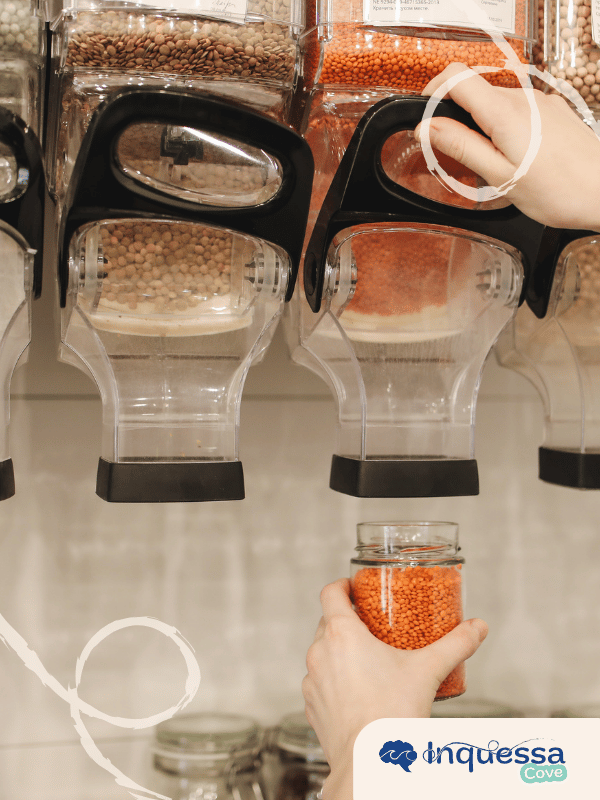
A refill system lets a container be filled and used again. In a shop, customers might bring a container to refill with soap or food. In another system, they may return an empty container and receive a full one.
A refill system needs more than the refill itself. Customers, containers, cleaning, transport, shops, and new supplies all need to connect. The system also needs to be easy enough for people to keep using it.
Returnable Containers
A returnable container is sent back and used again instead of being thrown away. Returnable drink bottles are one example.
In the mid-20th century, a single glass milk bottle could be washed, refilled, and delivered again about 20 to 30 times before it was finally recycled. Each return kept the same bottle in use for another trip. This is what makes a returnable system different from packaging that is thrown away after one use.
Washing, Tracking, and Transport
Containers cannot simply be refilled right away. They need to be collected, moved, checked, and cleaned before they can be used again.
Reuse systems use tracking, following containers as they are returned, washed, and used again. Commercial washing facilities can clean reusable plastic or glass food crates with water heated to about 60°C to 70°C. This can remove 99.9% of bacteria. The crates can then be tracked by barcodes and sent back into use. Tracking helps businesses know where containers are and whether enough of them are coming back.
What Makes Reuse Work
A reusable container is not automatically better just because it can be used again. The benefit depends on whether it actually comes back and is used many times.
Successful reuse systems need strong containers, reliable cleaning, practical transport, and places where people can return or refill them. Schools, shops, and delivery services may organize these steps in different ways. Access matters too because not everyone has a refill shop or return point nearby.
Reuse works best when the whole system makes repeated use realistic. The container is only one part of that system. Cleaning, collection, transport, tracking, and participation keep it moving.
Using the Same Container Again
Reuse means keeping a container in use instead of replacing it after one trip. This might mean bringing a bottle back to a shop, returning a food container after delivery, or using the same container again in a school cafeteria.
The important idea is that reuse is more than owning one reusable item. Containers need to stay in a working cycle. They have to be returned, cleaned, refilled, shared, or sent back into use. If too many containers leave the system after one use, the reuse system becomes much less effective.
Refill Shops and Stations
A refill system is an organized way of keeping containers in use through repeated filling or returning. In a shop, customers might bring a container to refill with soap or food. In another system, customers may return an empty container and receive a full one.
These systems depend on more than the refill itself. Containers, customers, cleaning, transport, shops, and replacement products all need to connect. The system also needs to be convenient enough that people actually bring containers back or use the refill option again.
Returnable Containers
A container that goes back into a reuse system instead of being discarded is a returnable container. Returnable drink bottles are one familiar example.
In the mid-20th century, one glass milk bottle could be washed, refilled, and delivered again about 20 to 30 times before being recycled. Each return kept the same bottle in use for another trip instead of requiring a new container. That repeated use is what gives returnable systems their advantage over packaging that is thrown away immediately.
Washing, Tracking, and Transport
Containers cannot simply be refilled without preparation. They need to be collected, transported, checked, and cleaned before they can safely return to use.
Refill systems may depend on tracking, following reusable containers through return, cleaning, transport, and reuse. Commercial washing facilities can clean reusable plastic or glass food crates with water heated to about 60°C to 70°C, removing 99.9 percent of bacteria. The crates can then be tracked by barcodes and sent back into use. Tracking helps businesses know where containers are and whether enough of them are returning to keep the system working.
What Makes Reuse Work
A reusable container is not automatically better simply because it can be used again. The benefit depends on whether it actually returns and completes many cycles of use.
Successful reuse systems need durable containers, reliable cleaning, practical transport, and places where people can easily return or refill them. Schools, shops, delivery services, and other systems may organize these steps differently. Access matters too, because not everyone has a refill shop or return point nearby.
Reuse works best when the whole system makes repeated use realistic. The container is only one part of that system. Cleaning, collection, transport, tracking, and participation are what keep it moving.
Refill and Reuse Systems
Using the Same Container Again
Reuse means keeping a container in use instead of replacing it after one trip. That might involve bringing a bottle back to a shop, returning a food container after delivery, or using the same container again in a school cafeteria.
The important idea is that reuse is more than owning one reusable item. Containers have to stay in a working cycle. They need to be returned, cleaned, refilled, shared, or sent back into use. If too many containers leave the system after one use, the reuse system becomes much less effective.
Refill Shops and Stations
A refill system is an organized way of keeping containers in use through repeated filling, return, or reuse. In a shop, customers might bring a container to refill with soap or food. In another system, customers may return an empty container and receive a full one.
These systems depend on more than the refill itself. Containers, customers, cleaning, transport, shops, and replacement products all need to connect. The system also has to be convenient enough that people actually bring containers back or use the refill option again.
Returnable Containers
A returnable container is designed to be collected, cleaned, and used again instead of discarded after one use. Returnable drink bottles are one familiar example.
In the mid-20th century, a single glass milk bottle could be washed, refilled, and delivered again about 20 to 30 times before it was finally recycled. Each return kept the same bottle in use for another trip instead of requiring a new container. That repeated use is what gives returnable systems their advantage over packaging that is thrown away immediately.
Washing, Tracking, and Transport
Containers cannot simply be refilled without preparation. They need to be collected, transported, checked, and cleaned before they can safely return to use.
Refill systems may also depend on tracking, following reusable containers through return, cleaning, transport, and reuse. Commercial washing facilities can clean reusable plastic or glass food crates with water heated to about 60°C to 70°C, removing 99.9 percent of bacteria. The crates can then be tracked by barcodes and sent back into use. Tracking helps businesses know where containers are and whether enough of them are returning to keep the system working.
What Makes Reuse Work
A reusable container is not automatically better simply because it can be used again. The benefit depends on whether it actually returns and completes many cycles of use.
Successful reuse systems therefore need durable containers, reliable cleaning, practical transport, and places where people can easily return or refill them. Schools, shops, delivery services, and other systems may organize these steps differently. Access matters too, because not everyone has a refill shop or return point nearby.
Reuse works best when the whole system makes repeated use realistic. The container is only one part of that system. Cleaning, collection, transport, tracking, and participation are what keep it moving.
Using the Same Container Again
Reuse means keeping a container in use instead of replacing it after one trip. That might involve returning a bottle to a shop, sending a food container back after delivery, or using the same container again in a school cafeteria.
However, reuse is more than simply owning one reusable item. Containers need to remain part of a working cycle in which they are returned, cleaned, refilled, shared, or sent back into use. If too many containers leave that cycle after only one use, the reuse system becomes much less effective.
Refill Shops and Stations
A refill system is an organized way of keeping containers in use through repeated filling, return, or reuse. In one shop, customers might bring their own containers to refill with food or soap. In another system, they may return an empty container and receive a full one in exchange.
The refill itself is only one part of the process. Containers, customers, cleaning, transport, shops, and replacement products all need to connect. The system also has to be convenient and reliable enough that people actually return containers or choose the refill option again.
Returnable Containers
A returnable container is designed to be collected, cleaned, and used again instead of discarded after one use. Returnable drink bottles are one familiar example.
In the mid-20th century, a single glass milk bottle could be washed, refilled, and delivered again about 20 to 30 times before it was finally recycled. Each successful return kept the same bottle in use for another trip instead of requiring a new container. That repeated cycle is what gives returnable systems their advantage over packaging discarded after a single use.
Washing, Tracking, and Transport
Reusable containers cannot simply be refilled immediately after they are returned. They need to be collected, transported, checked, and cleaned before they can safely enter another cycle of use.
Reuse systems may also depend on tracking, which means following reusable containers through return, cleaning, transport, and reuse. Commercial washing facilities can clean reusable plastic or glass food crates with water heated to about 60°C to 70°C, removing 99.9 percent of bacteria. The crates can then be tracked by barcodes and sent back into use. Tracking helps businesses know where containers are and whether enough of them are returning to keep the system functioning.
What Makes Reuse Work
A reusable container is not automatically better simply because it can be used again. Its advantage depends on whether the container actually returns and completes repeated cycles of use.
Successful reuse systems therefore need durable containers, reliable cleaning, practical transport, and places where people can easily return or refill them. Schools, shops, delivery services, and other systems may organize these steps differently, and access also matters because not everyone has a refill shop or return point nearby.
Reuse works best when the entire system makes repeated use realistic. The container itself is only one part of that system; cleaning, collection, transport, tracking, and participation are what keep the cycle moving.
Key Vocabulary
reuse (noun) Using an item again instead of replacing it after one use. (repeat use, using again)
working cycle (noun) A repeating system in which something returns and is used again. (reuse loop, repeated cycle)
refill (verb) To fill a container again after some or all of its contents have been used. (fill again, replenish)
exchange (noun) A process in which one item is returned and another is received in its place. (swap, trade)
convenient (adjective) ✅ Easy enough to use without requiring too much extra effort. (easy, practical)
reliable (adjective) ️ Able to work dependably again and again. (dependable, consistent)
durable (adjective) ️ Strong enough to remain useful through repeated use. (long-lasting, sturdy)
collection (noun) The organized gathering of returned containers. (pickup, gathering)
transport (noun) The movement of containers from one place to another. (movement, delivery)
commercial washing facility (noun) A large-scale facility designed to wash reusable containers or crates for repeated use. (washing center, cleaning facility)
barcode (noun) ️ A pattern of lines or symbols that can be scanned to identify and track an item. (scan code, identification code)
participation (noun) Taking part in a system or activity. (involvement, taking part)
access (noun) The ability to reach or use a service, return point, or refill option. (availability, opportunity)
