
Bottle Deposits: Paying People to Bring Containers Back
About this Article
Lines of Inquiry
- The function of deposits, refunds, return points, and sorting within a container-return system.
- Causes that can influence whether people return an empty bottle or can instead of throwing it away.
- Connections between individual returns and the larger collection, recycling, or reuse system that handles containers afterward.
Guiding Questions
- Why does giving an empty container a small money value change what people may do with it?
- Why is returning a bottle only the beginning of its journey through the system?
- What would make a bottle-deposit system easy or difficult for people to use?
Bottle Deposits: Paying People to Bring Containers Back
Paying a Deposit
A bottle deposit is extra money paid for a container. The money is returned when the container is brought back.
In Germany, many single-use drink containers have a €0.25 deposit. Shoppers can get this money back when they return the container. The deposit is added when the drink is bought. It is not a permanent extra charge if the eligible container is returned.
Returning the Bottle or Can
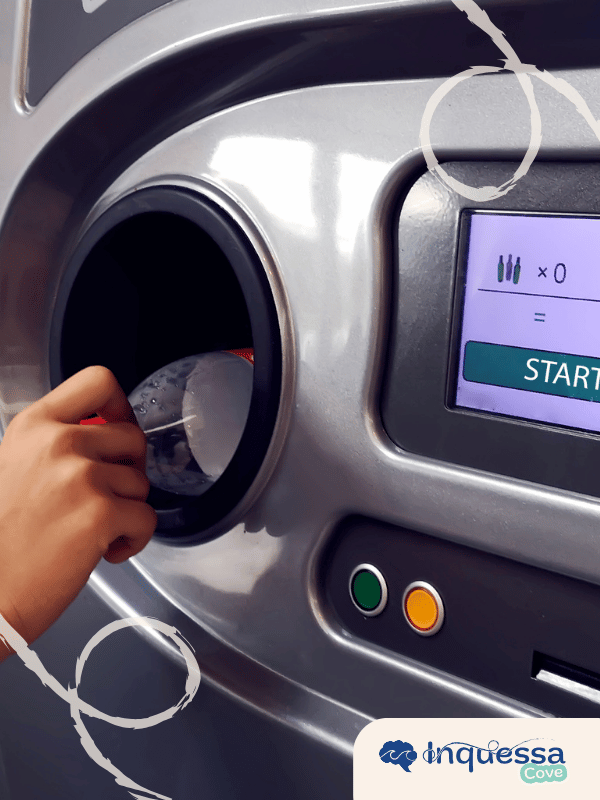
After the drink is finished, the empty container can be taken to a return point. The shopper then receives a refund, money that is given back after something is returned or paid for.
This creates a clear sequence: buy the drink, pay the deposit, return the container, and get the deposit money back. The system gives the empty bottle or can a small money value instead of treating it only as waste.
Sorting and Processing Returned Containers
Returned containers still need to be collected, sorted, and processed. Machines or workers identify which containers belong in the system and prepare them for the next steps.
Not every bottle or can is always part of the same deposit system. Rules can depend on the kind of drink, container, or local system. A returned single-use bottle may be recycled into material rather than washed and refilled in the same form.
Why Money Changes Behavior
Getting money back creates an incentive, something that encourages a person to take an action. Returning a container can feel more worthwhile when the deposit is waiting to be refunded.
A system’s return rate shows how many eligible containers come back. Germany’s deposit return system reports a 98% return rate for eligible single-use drink containers. A high return rate means most of the containers covered by the system are coming back instead of being left in ordinary waste or litter.
What Deposit Systems Can and Cannot Do
Deposit systems can collect large numbers of certain drink containers and give people a reason to return them. They can also help recycling systems receive a more separate stream of material.
But deposits do not cover every kind of plastic. They also need return locations, machines or workers, transport, and processing. A bottle deposit is one tool for managing some containers, not a solution for every kind of plastic waste.
Paying a Deposit
A bottle deposit is extra money paid for a container. The money is returned when the container is brought back. Instead of treating an empty bottle or can as worthless, the system gives it some value after use.
In Germany, many single-use drink containers have a €0.25 deposit. Shoppers can get that money back when they return the container. A shopper pays the price of the drink plus the deposit. The deposit is not meant to disappear. It is part of a system designed to encourage the container to come back.
Returning the Bottle or Can
After finishing the drink, the customer can take an eligible container to a collection point. Money returned to a person after they bring back a bottle, can, or other item is a refund. In this case, the refund is the customer getting the bottle deposit back.
The steps are simple: buy the drink, pay the deposit, return the empty container, and get the money back. Not every bottle or can is included in a deposit system, so shoppers need to know which containers are eligible.
Sorting and Processing Returned Containers
Returning a container is only the first step. Collected bottles and cans still need to be sorted so they can enter the right recycling or reuse pathway.
A returned bottle does not automatically become the same kind of bottle again. Deposit systems mainly help bring containers back into organized collection instead of leaving them in mixed rubbish or as litter. What happens next depends on the container and the system handling it.
Why Money Changes Behavior
An incentive is something that encourages an action. For example, getting money back for returning a bottle can increase the chance that people return it. The empty container now has a clear value instead of being something that might simply be thrown away.
Return rate means the share of bottles or cans people bring back. It can show how well a deposit system works. Germany’s deposit return system reports a 98 percent return rate for eligible single-use drink containers. This shows how a small amount of money can influence many everyday choices.
What Deposit Systems Can and Cannot Do
Bottle deposits can increase the number of containers that come back and reduce how many enter mixed waste or litter. They also give shoppers a clear action to take after finishing a drink: return the container and recover the deposit.
However, deposit systems do not cover every bottle, every container, or every kind of waste. They also do not guarantee that every returned container will be reused in the same form. Their main job is narrower: to encourage eligible drink containers to come back into an organized system.
Bottle Deposits: Paying People to Bring Containers Back
Paying a Deposit
A bottle deposit is an extra payment added to a container purchase and returned when the container is brought back. Instead of treating an empty bottle or can as worthless, the system gives it a small financial value after use.
In Germany, many single-use drink containers carry a €0.25 deposit that shoppers can get back when they return the container. A shopper pays the drink price plus the deposit at the store. The deposit is not meant to be money that disappears permanently. It is part of a return system designed to encourage the container to come back.
Returning the Bottle or Can
After finishing the drink, the customer can take an eligible container to a collection point. Once the container is accepted, the customer receives a refund, money returned after bringing the container back. In other words, the customer gets the bottle deposit back.
The steps are simple: buy the drink, pay the deposit, return the empty container, and receive the money back. Not every bottle or can is necessarily included in a deposit system, so the process depends on which containers are eligible. The system works best when shoppers can easily recognize which containers can be returned.
Sorting and Processing Returned Containers
Returning a container is only the beginning of what happens to it. Collected bottles and cans must then be sorted so they can enter the appropriate recycling or reuse pathway.
A returned bottle does not automatically become the same kind of bottle again. Deposit systems mainly help bring containers back into organized collection instead of leaving them in mixed rubbish or as litter. What happens next depends on the container and the system handling it. The deposit therefore supports collection, while later steps determine how the material is processed.
Why Money Changes Behavior
Receiving money back after returning a bottle encourages a particular behavior and is an example of an incentive. The container is no longer just an empty object someone might throw away. Returning it has a direct benefit.
A deposit system has a return rate, meaning the share of eligible containers that people bring back. Germany’s deposit return scheme reports a 98 percent return rate for eligible single-use drink containers. Such a high return rate shows how a small amount of money can influence millions of everyday decisions. When people have a clear financial reason to return containers, more of those containers can reach collection systems.
What Deposit Systems Can and Cannot Do
Bottle deposits can increase container returns and reduce the amount entering mixed waste or litter. They also give shoppers a clear action to take after finishing a drink: return the container and recover the deposit.
However, deposit systems do not cover every bottle, every container, or every kind of waste. They also do not guarantee that every returned container will be reused in the same form. Their main job is narrower: encourage eligible beverage containers to come back into an organized system. A bottle deposit can change one important part of recycling behavior without solving every problem connected to plastic or packaging waste.
Paying a Deposit
A bottle deposit is an extra payment added when an eligible container is purchased and returned when the container is brought back. Instead of treating an empty bottle or can as worthless, the system gives it a small financial value after use.
In Germany, many eligible single-use drink containers include a €0.25 deposit that shoppers receive back when the container is returned.
A shopper therefore pays both the drink price and the deposit at the store. The extra payment is not meant to disappear permanently; it is part of a return system designed to encourage the container to come back.
Returning the Bottle or Can
After finishing the drink, a customer can take an eligible container to a collection point. Once the container is accepted, the customer receives a refund, or money returned after the required conditions are met. In this system, the refund means getting the bottle deposit back.
The sequence is straightforward: buy the drink, pay the deposit, return the empty container, and receive the money back. However, not every bottle or can is necessarily included in the system. Customers therefore need to be able to recognize which containers are eligible for return.
Sorting and Processing Returned Containers
Returning a container is only the first stage of what happens next. Collected bottles and cans must still be sorted so they can enter the appropriate recycling or reuse pathway.
A returned bottle does not automatically become the same kind of bottle again. Deposit systems mainly help move containers back into organized collection rather than leaving them in mixed rubbish or as litter. What happens afterward depends on the material and the system handling it; therefore, the deposit supports collection while later steps determine how the container is processed.
Why Money Changes Behavior
Receiving money back for returning a container is an incentive, a benefit that encourages a person to take a particular action. The empty bottle or can is no longer simply an object someone might discard because bringing it back has a direct financial benefit.
A deposit system also has a return rate, the share of eligible containers that people bring back to the return system. Germany’s deposit return system has a 98 percent return rate for eligible single-use drink containers. Such a high return rate shows how a small financial incentive can influence millions of everyday decisions and help more containers reach organized collection.
What Deposit Systems Can and Cannot Do
Bottle deposits can increase the number of containers returned and reduce how many eligible bottles and cans enter mixed waste or become litter. They also give shoppers a clear action after finishing a drink: return the container and recover the deposit.
However, deposit systems do not cover every bottle, every container, or every type of waste. They also do not guarantee that every returned container will be reused in exactly the same form. Their purpose is narrower: to encourage eligible beverage containers to return to an organized system. A bottle deposit can therefore change one important part of recycling behavior without solving every problem connected to plastic or packaging waste.
Key Vocabulary
eligible (adjective) ✅ Allowed or accepted as part of a particular system. (accepted, qualifying)
collection point (noun) A place where returned items are gathered. (return point, drop-off point)
financial value (noun) The amount of money something is worth. (money value, monetary worth)
sequence (noun) A set of steps that happen in a particular order. (order, series)
accepted (adjective) ✔️ Approved or recognized by a system. (approved, allowed)
sorting (noun) ♻️ The process of separating items into groups so they can be handled in different ways. (separating, organizing)
processing (noun) ⚙️ The steps used to prepare or change a material after collection. (treatment, handling)
organized collection (noun) A planned system for gathering materials after use. (collection system, structured collection)
mixed waste (noun) ️ Different kinds of rubbish collected together instead of being separated. (mixed rubbish, unsorted waste)
direct benefit (noun) An advantage a person receives as a result of taking an action. (immediate benefit, reward)
financial reason (noun) A money-related reason for making a particular choice. (economic reason, money incentive)
beverage container (noun) A bottle, can, or other container used to hold a drink. (drink container, drinks packaging)
