
Ocean Garbage Patches Are Not Islands
About this Article
Lines of Inquiry
- The difference between the popular image of a “trash island” and the actual form of an ocean garbage patch.
- How moving ocean currents can concentrate scattered debris without creating a fixed or solid mass.
- Why the size and distribution of plastic pieces make garbage patches difficult to measure and clean.
Guiding Questions
- Why can an enormous amount of plastic be present even when the ocean surface does not look covered with rubbish?
- How do currents create a collection area without creating a solid island?
- Why might removing a few large objects be very different from cleaning an entire garbage patch?
Ocean Garbage Patches Are Not Islands
Plastic Moved by Ocean Currents
Plastic floating in the ocean does not stay where it first enters the water. An ocean current is a large, continuing movement of seawater in a regular direction.
Some large current systems move in rotating patterns called gyres. Garbage patches form when rotating ocean currents called gyres pull debris into broad areas where it collects. The material keeps moving, but currents can bring scattered pieces into the same region.
Not a Floating Island
An ocean garbage patch is a broad region where currents gather scattered plastic and other debris.
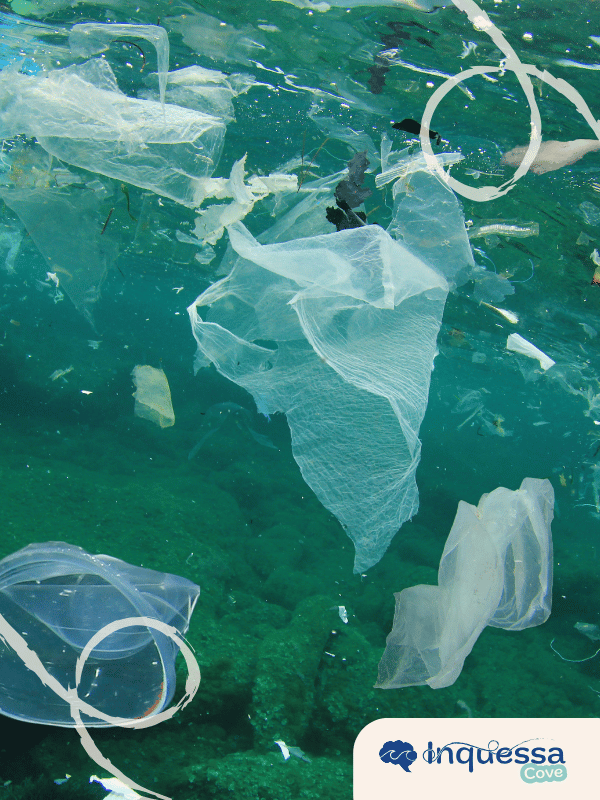
Garbage patches are large areas where debris collects, not solid islands of trash that people can walk on. A boat can travel through one without crossing a solid layer of rubbish. Some plastic is easy to see, while other pieces are spread farther apart or mixed through the upper water.
Tiny Pieces and Larger Debris
Debris is scattered waste or broken material. In a garbage patch, it can include tiny fragments, larger objects, and fishing gear.
The Great Pacific Garbage Patch is estimated to contain more than 1.8 trillion plastic pieces weighing about 100,000 tonnes. Small fragments add greatly to the number of pieces, while larger objects add more weight.
Why Garbage Patches Are Hard to Clean
Garbage patches are difficult to clean because the plastic is spread across a huge moving area rather than gathered into one pile.
Large objects may be easier to locate and collect. Tiny fragments are much harder to remove from surrounding water. Currents and waves keep moving the debris as cleanup takes place.
Why the Misconception Matters
Calling a garbage patch an island can create the wrong picture. It may make people imagine one solid pile that could simply be scooped away.
Understanding the real shape of a garbage patch helps explain why ocean cleanup is difficult and why stopping plastic before it spreads can matter too.
Plastic Moved by Ocean Currents
Plastic floating in the ocean does not stay where it first enters the water. A large, steady movement of seawater that flows in a regular direction is an ocean current. Currents can carry floating plastic across long distances.
Some large ocean currents move in rotating patterns called gyres. These currents can carry floating plastic and other debris into areas where more of it collects. The material does not stop moving, but currents can keep bringing scattered pieces into the same broad region.
Not a Floating Island
An ocean garbage patch is not a solid island; it is a broad area where currents gather scattered plastic and debris. The word “patch” can be misleading because the material is not packed together into a solid surface.
Garbage patches are large areas where debris collects, not solid islands of trash that people can walk on. A boat can travel through one without crossing a continuous layer of rubbish. Some plastic may be easy to see, while other pieces are spread farther apart or mixed through the upper water. The amount of plastic can still be enormous even when the ocean surface does not look covered with trash.
Tiny Pieces and Larger Debris
Debris, waste such as plastic pieces, can collect in ocean currents without forming a solid island. Ocean debris can include tiny plastic fragments, larger objects, and lost or discarded fishing gear.
The Great Pacific Garbage Patch is estimated to contain more than 1.8 trillion plastic pieces weighing about 100,000 tonnes. A huge number of small fragments add to the piece count, while larger and heavier objects add more of the weight. This mixture is one reason a garbage patch does not look like a single floating heap. Much of the plastic is scattered through a very large area.
Why Garbage Patches Are Hard to Clean
Garbage patches are difficult to clean because the plastic is spread across a huge moving area rather than gathered into one pile.
Pieces also vary greatly in size. Large objects may be easier to find and collect, while tiny fragments can be difficult to remove from the surrounding water. Currents and waves continue moving the debris while cleanup takes place.
A garbage patch therefore cannot simply be scooped up like rubbish from a floor. Cleaning one means trying to collect scattered, moving pieces from an enormous area of ocean.
Plastic Moved by Ocean Currents
Plastic floating in the ocean does not stay where it first enters the water. An ocean current is a large, continuing movement of seawater that flows in a regular direction. Currents can carry floating plastic across long distances.
Some large current systems move in broad rotating patterns called gyres. These rotating currents can draw floating plastic and other debris toward areas where more of it collects. The material does not stop moving, but currents can keep bringing scattered pieces into the same broad region.
Not a Floating Island
An ocean garbage patch is a broad region where currents gather scattered plastic and other debris. The word “patch” can be misleading because the material is not packed together into a solid surface.
Garbage patches are large areas where debris collects, not solid islands of trash that people can walk on. A boat can travel through one without crossing a continuous layer of rubbish. Some plastic may be easy to see, while other pieces are spread farther apart or mixed through the upper water. The amount of plastic can still be enormous even when the ocean surface does not look covered with trash.
Tiny Pieces and Larger Debris
Garbage patches contain plastic in many sizes and forms. Debris is scattered material such as broken pieces, rubbish, or remains. In the ocean, debris can include tiny plastic fragments, larger objects, and lost or discarded fishing gear.
The Great Pacific Garbage Patch is estimated to contain more than 1.8 trillion plastic pieces weighing about 100,000 tonnes. A huge number of small fragments contribute to the piece count, while larger and heavier objects contribute more of the weight. This mixture is one reason a garbage patch does not look like a single floating heap. Much of the plastic is scattered through a very large area.
Why Garbage Patches Are Hard to Clean
Garbage patches are difficult to clean because the plastic is spread across a huge moving area rather than gathered into one pile.
Pieces also vary greatly in size. Large objects may be easier to locate and collect, while tiny fragments can be difficult to remove from the surrounding water. Currents and waves continue moving the debris as cleanup takes place.
A garbage patch is therefore not something that can simply be scooped up like rubbish from a floor. Cleaning one means trying to collect scattered, moving pieces from an enormous area of ocean.
Plastic Moved by Ocean Currents
Plastic floating in the ocean does not remain in one place. An ocean current is a large, continuing movement of seawater that flows in a regular direction. Currents can carry floating material over long distances and connect places that are far apart.
Some large ocean current systems move in broad rotating patterns called gyres. These currents can draw floating plastic and other debris toward areas where more of it collects. However, the material is still being moved by water. A garbage patch is therefore a changing region shaped by currents rather than a fixed pile of waste.
Not a Floating Island
An ocean garbage patch is a broad area where ocean currents gather scattered plastic and other debris, or material such as broken pieces and rubbish. Ocean garbage patches are broad areas where debris collects, not solid islands of trash that people can walk on.
A boat can travel through one without crossing a continuous layer of rubbish. Some pieces may be easy to see, while others are scattered farther apart or mixed through the upper water. Therefore, a large amount of plastic can be present even when the ocean surface does not look covered with trash.
Tiny Pieces and Larger Debris
Garbage patches contain plastic in many sizes. Larger items may include containers, ropes, fishing gear, or broken pieces of products, while much smaller fragments can be spread through the water.
The Great Pacific Garbage Patch is estimated to contain more than 1.8 trillion pieces of plastic weighing about 100,000 tonnes. A huge number of small fragments contributes to the piece count, while larger and heavier objects contribute more of the total weight. This mixture helps explain why a garbage patch does not look like a single floating heap.
Why Garbage Patches Are Hard to Clean
Removing plastic from a garbage patch is difficult because the debris is spread across an enormous moving area. Currents continue to shift the material, and much of the plastic is not gathered into one dense group that can simply be lifted from the water.
The size of the pieces creates another challenge. Larger objects may be easier to see and collect, while very small fragments can be mixed through the water across a much wider region. A cleanup method that works for one size of debris may therefore be less effective for another.
Garbage patches are easier to understand as broad concentration zones than as islands. Although currents bring more debris into these regions, the plastic remains scattered within a moving ocean system. That combination of scale, movement, and widely dispersed material makes cleanup much more complicated.
Key Vocabulary
gyre (noun) A large system of ocean currents that moves in a broad rotating pattern. (rotating current system, ocean circulation)
floating material (noun) Material that remains on or near the surface of water. (floating debris, surface material)
scattered (adjective) ✨ Spread over a wide area rather than gathered together. (dispersed, spread out)
continuous layer (noun) A surface that stretches across an area without large gaps. (unbroken layer, solid covering)
fragment (noun) A small piece broken from a larger object. (piece, shard)
fishing gear (noun) Equipment such as nets, ropes, lines, or traps used for fishing. (fishing equipment, gear)
accumulate (verb) To gather or build up gradually in one area. (collect, build up)
upper water (noun) Water close to the ocean surface. (surface water, upper layer)
surrounding water (noun) The water around pieces of debris. (nearby water, surrounding seawater)
moving region (noun) An area whose position and shape can shift because the water within it continues to move. (changing area, shifting zone)
piece count (noun) The number of separate pieces present. (item count, number of pieces)
total weight (noun) ⚖️ The combined mass of all the material being measured. (combined weight, total mass)
