How Plastic Reaches the Ocean
About this Article
Lines of Inquiry
- Connections linking streets, drainage systems, rivers, coasts, and the ocean.
- Conditions that cause plastic to escape waste systems and begin moving through water.
- Why preventing plastic earlier in its journey can change what reaches waterways later.
Guiding Questions
- How can plastic dropped far inland eventually become ocean pollution?
- Why does a storm drain sometimes connect a street much more directly to a river than people expect?
- At which points in the journey would stopping plastic probably be easiest?
How Plastic Reaches the Ocean
Ocean Plastic Often Starts on Land
Much of the plastic found in oceans begins far from the coast. Plastic pollution is plastic waste that builds up or spreads in the environment.
Most marine debris begins on land and can reach oceans and large lakes through littering, poor waste management, stormwater runoff, and other pathways. A wrapper dropped on a street can travel through drains and waterways before reaching the sea.
Wind, Rain, and Drains
Up to 80% of plastic pollution in the ocean starts on land. Wind can blow lightweight plastic from streets or open bins. Rain can carry it across pavement.
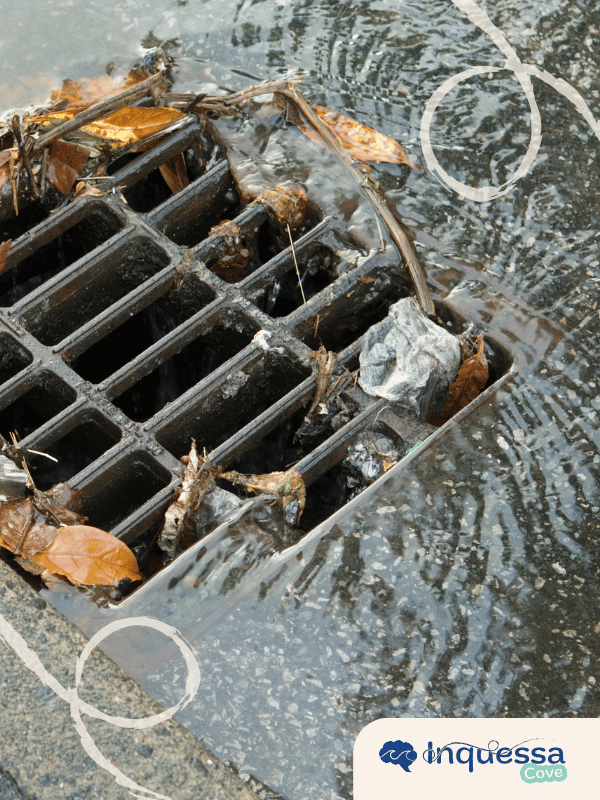
A storm drain is an opening or pipe that carries rainwater away from streets. In many communities, storm drains lead toward nearby streams or rivers. This means plastic does not need to be dropped beside the ocean to reach it.
Rivers as Pathways
Rivers collect water from towns, streams, drains, and large areas of land. Plastic entering these waterways can move downstream.
More than 1,000 rivers carry about 80% of the plastic that rivers deliver to the ocean each year. Some rivers carry much more than others because more waste enters the areas connected to them.
Plastic From Coasts and Boats
Plastic can also enter the ocean close to the coast. Litter on beaches can be moved by wind, waves, tides, or storms.
Boats and other activity at sea can also lose ropes, containers, equipment, or packaging directly into the water.
Why Prevention Starts Upstream
Once plastic reaches moving water, it can spread across a much larger area. Upstream prevention means stopping plastic near where it is used or thrown away, before it reaches drains, rivers, or the ocean.
Keeping litter in bins, improving collection, and keeping plastic out of storm drains can stop some journeys before they begin. Ocean pollution can start on land, so prevention can start there too.
Ocean Plastic Often Starts on Land
Much of the plastic found in oceans begins far from the coast. Plastic pollution is the buildup or spread of plastic waste in the environment. Litter, overflowing waste systems, storms, and poorly managed waste can contribute to plastic pollution. Once plastic pollution enters connected waterways, it can move from streets and drains into rivers, coasts, and the ocean.
Most marine debris begins on land. It can reach oceans and large lakes through littering, poor waste management, stormwater runoff, and other pathways. A wrapper dropped on a city street, for example, may travel through drains and waterways before it ever reaches the coast. Once plastic escapes collection, moving water can carry it far from where it started.
Wind, Rain, and Drains
Up to 80 percent of plastic pollution in the ocean starts on land. Plastic carried into storm drains can enter local river networks and continue moving toward the coast. Wind can blow lightweight plastic from streets, open bins, and other exposed places. Rainwater can then carry that litter across pavement toward a storm drain, a drain that carries rainwater away.
In many communities, storm drains carry rainwater directly to nearby streams, rivers, or other waterways instead of sending it to a wastewater treatment plant. This pathway can begin far inland. Plastic dropped on a street does not need to be beside a beach or ocean to eventually reach the sea. Once it enters a connected drainage system, flowing water can move it farther downstream.
Rivers as Pathways
Rivers gather water from large areas, including smaller streams, drainage systems, towns, and cities. Plastic that enters one of those connected waterways can be carried farther as the water moves downstream.
More than 1,000 rivers carry about 80 percent of the plastic that rivers deliver to the ocean each year. Some rivers carry much more plastic than others because larger amounts of waste enter the land and waterways connected to them.
As rivers approach the coast, they can carry floating plastic and other debris into estuaries and the sea. Rivers are therefore one of the main routes connecting plastic lost on land with plastic found in ocean environments.
Plastic From Coasts and Boats
Rivers are not the only route into the ocean. Plastic can also enter the water much closer to the coast. Litter left on beaches or near shorelines can be carried into the sea by wind, waves, tides, or storms. Waste that escapes collection in coastal communities may have only a short distance to travel before reaching ocean water.
Plastic can also come from boats and other activity at sea. Containers, equipment, ropes, packaging, and other plastic items may be lost or damaged while people work or travel on the water. These materials enter the ocean directly rather than first moving through inland drains and rivers.
Why Prevention Starts Upstream
Once plastic reaches rivers or the ocean, moving water can spread it across a much larger area. Collecting scattered plastic from waterways is usually more difficult than keeping it from entering them in the first place.
Upstream prevention reduces plastic leakage near its source rather than relying mainly on cleanup later. Preventing litter from escaping bins, improving waste collection, and keeping plastic out of storm drains can stop the journey before it begins.
The earlier plastic is stopped, the fewer connected waterways it can enter. Ocean pollution can begin with a problem on land, so prevention can begin there too.
Ocean Plastic Often Starts on Land
Much of the plastic found in oceans begins far from the coast. Plastic pollution is the accumulation or spread of plastic waste in the environment.
Most marine debris begins on land and can reach oceans and large lakes through littering, poor waste management, stormwater runoff, and other pathways. A wrapper dropped on a city street, for example, may travel through drains and waterways before it ever reaches the coast. Once plastic escapes collection, moving water can carry it far from where it started.
Wind, Rain, and Drains
Up to 80% of plastic pollution in the ocean starts on land. Plastic carried into storm drains can enter local river networks and continue moving toward the coast. Wind can blow lightweight plastic from streets, open bins, and other exposed places. Rainwater can then carry that litter across pavement toward a storm drain. A storm drain is an opening or pipe that carries rainwater away from streets and helps reduce flooding.
In many communities, storm drains carry rainwater directly to nearby streams, rivers, or other waterways instead of sending it to a wastewater treatment plant. This pathway can begin far inland. Plastic dropped on a street does not need to be beside a beach or ocean to eventually reach the sea. Once it enters a connected drainage system, flowing water can move it from a neighborhood into streams and rivers that carry it farther downstream.
Rivers as Pathways
Rivers gather water from large areas, including smaller streams, drainage systems, towns, and cities. Plastic that enters one of those connected waterways can be carried farther as the water moves downstream.
More than 1,000 rivers carry about 80% of the plastic that rivers deliver to the ocean each year. Some rivers carry much more plastic than others because larger amounts of waste enter the land and waterways connected to them.
As rivers approach the coast, they can carry floating plastic and other debris into estuaries and the sea. Rivers are therefore one of the main routes connecting plastic lost on land with plastic found in ocean environments.
Plastic From Coasts and Boats
Rivers are not the only route into the ocean. Plastic can also enter the water much closer to the coast. Litter left on beaches or near shorelines can be carried into the sea by wind, waves, tides, or storms. Waste that escapes collection in coastal communities may have only a short distance to travel before reaching ocean water.
Plastic can also come from boats and other activity at sea. Containers, equipment, ropes, packaging, and other plastic items may be lost or damaged while people work or travel on the water. These materials enter the ocean directly rather than first moving through inland drains and rivers.
Why Prevention Starts Upstream
Once plastic reaches rivers or the ocean, moving water can spread it across a much larger area. Collecting scattered plastic from waterways is usually more difficult than keeping it from entering them in the first place.
Upstream prevention means stopping plastic near where it is used or thrown away, before it reaches drains, rivers, or the ocean. Preventing litter from escaping bins, improving waste collection, and keeping plastic out of storm drains can stop the journey before it begins.
The earlier plastic is stopped, the fewer connected waterways it can enter. Ocean pollution can begin with a problem on land, so prevention can begin there too.
Ocean Plastic Often Starts on Land
Much of the plastic found in oceans begins far from the coast. Plastic pollution is the accumulation or spread of plastic waste in the environment.
Most marine debris begins on land and can reach oceans and large lakes through littering, poor waste management, stormwater runoff, and other pathways. A wrapper dropped on a city street, for example, may travel through drains and waterways before it ever reaches the coast. Once plastic escapes collection, moving water can carry it far from where it started.
Wind, Rain, and Drains
Up to 80 percent of plastic pollution in the ocean starts on land. Plastic washed or blown into storm drains can enter local river networks and continue moving toward the coast. Wind can move lightweight plastic from streets, open bins, and other exposed places. Rainwater can then carry that litter across pavement toward a storm drain, an opening or pipe that carries rainwater away from streets and into a drainage system.
In many communities, storm drains carry rainwater directly to nearby streams, rivers, or other waterways instead of sending it to a wastewater treatment plant. Therefore, this pathway can begin far inland. Plastic dropped on a street does not need to be beside a beach or ocean to eventually reach the sea. Once it enters a connected drainage system, flowing water can move it from a neighborhood into streams and rivers that carry it farther downstream.
Rivers as Pathways
Rivers gather water from large areas, including smaller streams, drainage systems, towns, and cities. Plastic that enters one of these connected waterways can be carried farther as the water moves downstream.
More than 1,000 rivers carry about 80 percent of the plastic that rivers deliver to the ocean each year. Some rivers carry much more plastic than others because larger amounts of waste enter the land and waterways connected to them.
As rivers approach the coast, they can carry floating plastic and other debris into estuaries and the sea. Rivers therefore form one of the main routes connecting plastic lost on land with plastic found in ocean environments.
Plastic From Coasts and Boats
Rivers are not the only route into the ocean. Plastic can also enter the water much closer to the coast. Litter left on beaches or near shorelines can be carried into the sea by wind, waves, tides, or storms. Waste that escapes collection in coastal communities may have only a short distance to travel before reaching ocean water.
Plastic can also come from boats and other activities at sea. Containers, equipment, ropes, packaging, and other plastic items may be lost or damaged while people work or travel on the water. Unlike plastic carried through inland drains and rivers, these materials can enter the ocean directly.
Why Prevention Starts Upstream
Once plastic reaches rivers or the ocean, moving water can spread it across a much larger area. Collecting scattered plastic from waterways is usually more difficult than preventing it from entering those waterways in the first place.
Upstream prevention means stopping plastic before it reaches drains, rivers, or the ocean. Preventing litter from escaping bins, improving waste collection, and keeping plastic out of storm drains can stop the journey before it begins.
The earlier plastic is stopped, the fewer connected waterways it can enter. Ocean pollution can begin with a problem on land; therefore, prevention can begin there too.
Key Vocabulary
marine debris (noun) Human-made material that has been lost, thrown away, or abandoned in oceans, lakes, or other waterways. (waterway litter, marine waste)
stormwater runoff (noun) ️ Rainwater that flows across streets, roofs, and other surfaces instead of soaking into the ground. (rain runoff, surface water)
drainage system (noun) A network of drains, channels, or pipes that carries water away from an area. (water-drain system, drainage network)
waterway (noun) ️ A river, stream, canal, or other route through which water moves. (water channel, water route)
waste management (noun) The systems used to collect, transport, process, and dispose of waste. (waste system, rubbish management)
wastewater treatment plant (noun) A facility that cleans used water before it is released or reused. (water-treatment facility, sewage-treatment plant)
downstream (adverb/adjective) ⬇️ In the direction that a river or stream flows. (with the current, farther along the river)
estuary (noun) A coastal area where river water mixes with seawater. (river mouth, tidal inlet)
shoreline (noun) ️ The edge of a body of water where land and water meet. (water’s edge, coast)
coastal community (noun) ️ A town, city, or settlement located near the sea or ocean. (coastal settlement, seaside community)
containment (noun) ️ Keeping waste securely within bins, facilities, or other systems so it does not escape. (control, secure storage)
directly (adverb) ➡️ Without passing through another place or stage first. (straight, immediately)
