
Inside a Plastic Recycling Center
About this Article
Lines of Inquiry
- The different functions performed by workers, sensors, machines, and sorting systems inside a recycling center.
- Changes in recyclable material as mixed items become separated streams, bales, flakes, and material for later processing.
- The limits of sorting as one stage in a longer recycling process.
Guiding Questions
- Why does a recycling center use several kinds of sorting instead of relying on one machine?
- At what point in this process has plastic actually become recycled material?
Inside a Plastic Recycling Center
From Collection to Sorting
A recycling center is a facility where collected recyclable materials are sorted and prepared for further processing. Trucks may deliver bottles, tubs, paper, metal, and other items mixed together.
The first job is to separate these materials into groups. Each material stream is a group of similar materials moving through the recycling system.
Machines That Separate Materials
Machines can use clues such as size, weight, shape, magnetism, or the way an object reacts to light.
Recycling centers can use optical scanners, air, magnets, size sorting, robotics, artificial intelligence, and workers to separate materials. Different facilities use different combinations of equipment.
Workers Who Check the Stream
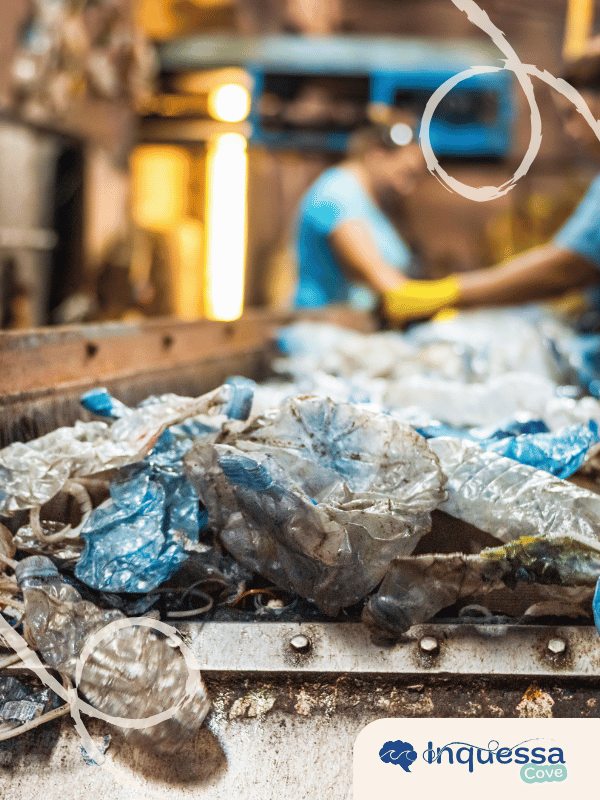
People are also important in sorting. Workers can spot items that machines miss and remove materials that could cause problems.
Workers may remove contamination such as plastic bags, wrappers, wires, textiles, and food waste from conveyor belts. Their work helps protect equipment and improves the quality of the sorted material.
Plastic Types and Symbols
Plastic items can look alike even when they are made from different materials. Numbers and symbols can help identify plastic types, but a symbol does not guarantee that a local facility accepts the item.
Number 1 PET and Number 2 HDPE make up about 97% of plastic bottles sold. Plastics numbered 3 through 7 can be much harder to process and may have recycling rates near zero in many towns.
Bales, Flakes, and New Materials
After useful materials are separated, some are pressed into a bale, a compressed bundle prepared for storage or transport.
Plastic may later be shredded into flakes and sent for more processing. Sorting and baling prepare material for later steps that can turn it into something new.
Why Sorting Is Not Perfect
Recycling centers handle large amounts of mixed material very quickly. Machines can make mistakes, workers cannot catch everything, and some plastics are difficult to separate.
Putting plastic into a recycling bin does not guarantee that it becomes a new product. Sorting is one important stage in a longer recycling pathway.
From Collection to Sorting
A recycling center is part of a waste system where collected materials are sorted, separated, and prepared for further processing. When trucks deliver recyclables, the materials do not immediately become new products. Bottles, tubs, trays, paper, metal, and other items may first arrive mixed together.
The center’s first job is to separate these materials into groups that can be handled more easily. Some facilities receive materials that were already partly separated, while others must sort a much more mixed load.
Machines That Separate Materials
Sorting equipment uses several clues to separate one material from another. Machines may look at an object’s size, weight, shape, or the way it responds to light. Magnets can remove some metals, while air or moving equipment can redirect lighter materials.
Recycling centers can use several methods to separate materials. These include optical scanning, air-based sorting, robotics, artificial intelligence, and sorting by size, magnetism, or weight. Each method helps separate part of the mixture. No single machine can identify and handle every item on its own.
Workers Who Check the Stream
People are still an important part of the process. Materials move along conveyor belts, where workers can spot items that machines may miss or that should not be in the recycling stream.
A material stream, the flow of materials through a system, moves through sorting and recycling steps. Keeping unwanted items out of that stream helps the correct materials continue through sorting. Workers may remove plastic bags, candy wrappers, wires, textiles, food waste, and other unwanted materials from conveyor belts by hand. Their work helps protect equipment and improve the quality of the sorted material.
Plastic Types and Symbols
Plastic items can look similar even when they are made from different materials. Numbers and recycling symbols can provide information about the type of plastic, but a symbol does not guarantee that a local facility can recycle the item.
Number 1 PET and Number 2 HDPE make up about 97 percent of plastic bottles sold. Recycling facilities can usually process these more easily. Plastics numbered 3 through 7 can be much harder to process and may have recycling rates near zero in many towns. Sorting these materials correctly matters because different plastics may need different processing.
Bales, Flakes, and New Materials
Once useful materials have been separated, some are pressed into large bundles. A tightly compressed bundle of sorted recyclable material prepared for storage or transport is called a bale. Bales make large amounts of material easier to handle and move to the next processing facility.
Plastic may later be shredded into smaller flakes and prepared for further processing. At this stage, the material is still partway through recycling. Sorting and baling prepare it for the steps that can turn recovered plastic into material for new products.
Why Sorting Is Not Perfect
Recycling centers handle large amounts of mixed material moving quickly through complicated systems. Machines can make mistakes, workers cannot catch every unwanted item, and some plastics are difficult to separate or process.
That is why putting plastic into a recycling bin does not guarantee that it will become something new. Sorting is one important stage between collection and recycling, and what happens next depends on the material, the facility, and the systems available to process it.
From Collection to Sorting
A recycling center connects collection with processing by using workers, machines, and sorting systems to separate usable materials. When trucks deliver recyclables, the materials do not immediately become new products. Bottles, tubs, trays, paper, metal, and other items may first arrive mixed together.
The center’s first job is to separate these materials into groups that can be handled more easily. Some facilities receive materials that were already partly separated, while others must sort a much more mixed load.
Machines That Separate Materials
Sorting equipment uses several clues to separate one material from another. Machines may look at an object’s size, weight, shape, or the way it responds to light. Magnets can remove some metals, while air or moving equipment can redirect lighter materials.
Recycling facilities may combine optical scanning, air-based sorting, mechanical redirection, robotics, artificial intelligence, size sorting, magnetic sorting, and weight sorting. Each method helps separate part of the mixture. No single machine can identify and handle every item on its own.
Workers Who Check the Stream
People remain an important part of the process. Materials move along conveyor belts, where workers can spot items that machines may miss or that should not be in the recycling stream.
A material stream is the flow of a particular material through collection and processing. Keeping unwanted items out of that stream helps the correct materials continue through sorting. Workers may manually remove plastic bags, candy wrappers, wires, textiles, food waste, and other unwanted materials from conveyor belts. Their work helps protect equipment and improves the quality of the sorted material.
Plastic Types and Symbols
Plastic items can look similar even when they are made from different materials. Numbers and recycling symbols can provide information about the type of plastic, but a symbol does not guarantee that a local facility can recycle the item.
Number 1 PET and Number 2 HDPE make up about 97% of plastic bottles sold. Recycling facilities can process these more easily. Plastics numbered 3 through 7 can be much harder to process and may have recycling rates near zero in many towns. Sorting these materials correctly matters because different plastics may need different processing.
Bales, Flakes, and New Materials
Once useful materials have been separated, some are pressed into large bundles. A bale is a compressed bundle of sorted recyclable material prepared for storage or transport. Bales make large amounts of material easier to handle and move to the next processing facility.
Plastic may later be shredded into smaller flakes and prepared for further processing. At this stage, the material is still partway through recycling. Sorting and baling prepare it for the steps that can turn recovered plastic into material for new products.
Why Sorting Is Not Perfect
Recycling centers handle large amounts of mixed material moving quickly through complicated systems. Machines can make mistakes, workers cannot catch every unwanted item, and some plastics are difficult to separate or process.
That is why putting plastic into a recycling bin does not guarantee that it will become something new. Sorting is one important stage between collection and recycling, and what happens next depends on the material, the facility, and the systems available to process it.
From Collection to Sorting
A recycling center uses workers, machines, and sorting systems to separate collected materials for further processing. When trucks deliver recyclables, those materials do not immediately become new products. Bottles, tubs, trays, paper, metal, and other items may first arrive mixed together.
The center’s first job is to separate these materials into groups that can be handled more easily. Some facilities receive materials that have already been partly separated, while others must sort a much more mixed load. Therefore, the amount of sorting needed can depend on how materials were collected before they reached the facility.
Machines That Separate Materials
Sorting equipment uses several clues to separate one material from another. Machines may look at an object’s size, weight, shape, or the way it responds to light. Magnets can remove some metals, while air or moving equipment can redirect lighter materials.
Recycling facilities can use several methods to separate materials, including optical scanning, air-based sorting, mechanical redirection, robotics, artificial intelligence, magnets, and sorting by size or weight. Each method helps separate part of the mixture. However, no single machine can identify and handle every item on its own.
Workers Who Check the Stream
People remain an important part of the sorting process. Materials move along conveyor belts, where workers can spot items that machines may miss or materials that should not be in the recycling stream.
A material stream is the flow of a particular material through collection and processing. Keeping unwanted items out of that stream helps the correct materials continue through sorting. Workers may remove plastic bags, candy wrappers, wires, textiles, food waste, and other unwanted materials by hand as recyclables move along conveyor belts. Their work helps protect equipment and improves the quality of the material that continues through the system.
Plastic Types and Symbols
Plastic items can look similar even when they are made from different materials. Numbers and recycling symbols can provide information about the type of plastic, but a symbol does not guarantee that a local facility can recycle the item.
Number 1 PET and Number 2 HDPE make up about 97 percent of plastic bottles sold. Recycling facilities can usually process these more easily. Plastics numbered 3 through 7 can be much harder to recycle and may have recycling rates near zero in many towns. Different plastics can require different processing, so sorting them correctly matters before they move to later recycling stages.
Bales, Flakes, and New Materials
Once useful materials have been separated, some are pressed into large bundles. A bale is a compressed bundle of sorted recyclable material prepared for storage or transport. Bales make large amounts of material easier to handle and move to the next processing facility.
Plastic may later be shredded into smaller flakes and prepared for further processing. At this stage, the material is still only partway through recycling. Sorting and baling prepare it for the later steps that can turn recovered plastic into material for new products.
Why Sorting Is Not Perfect
Recycling centers handle large amounts of mixed material moving quickly through complicated systems. Machines can make mistakes, workers cannot catch every unwanted item, and some plastics are difficult to separate or process.
Therefore, putting plastic into a recycling bin does not guarantee that it will become something new. Sorting is one important stage between collection and recycling, and what happens afterward depends on the material, the facility, and the systems available to process it.
Key Vocabulary
conveyor belt (noun) A moving belt that carries materials from one part of a facility to another. (moving belt, transport belt)
optical scanning (noun) A sorting method that uses light and sensors to identify materials. (light-based sorting, sensor sorting)
robotics (noun) The use of programmable machines to perform tasks such as identifying or moving materials. (automated machines, robot systems)
contamination (noun) Unwanted material mixed into a recycling stream that can interfere with sorting or processing. (unwanted material, incorrect material)
compressed (adjective) Pressed tightly into a smaller amount of space. (compacted, squeezed together)
flake (noun) A small piece of plastic created after larger plastic items are shredded. (small fragment, shredded piece)
magnetic sorting (noun) A sorting method that uses magnets to separate certain metals. (magnet separation, metal sorting)
air-based sorting (noun) A method that uses moving air to separate lighter materials from heavier ones. (air separation, airflow sorting)
artificial intelligence (noun) Computer systems that can identify patterns or make decisions, such as recognizing objects on a sorting line. (AI, machine intelligence)
manual sorting (noun) ✋ Sorting performed by people rather than entirely by machines. (hand sorting, human sorting)
shredded (adjective) ✂️ Cut or torn into many small pieces. (chopped, broken into pieces)
further processing (noun) ⚙️ Additional steps that prepare sorted material for reuse or manufacturing. (later processing, next-stage treatment)
