
Plastic Waste From Electronics and Hospitals
About this Article
Lines of Inquiry
- Connections between the materials inside electronics and medical products and the special waste pathways they may require after use.
- The role of sorting, treatment, and material identification in protecting workers, equipment, and the environment.
- Responsibility for designing products and waste systems that make valuable materials easier to recover while safely managing contamination and other risks.
Guiding Questions
- Why can plastic from electronics or hospitals require different treatment from ordinary household plastic?
- How do mixed materials and contamination risks affect whether plastic can be recycled?
- How could product design make electronics or medical products easier to handle safely after use?
Plastic Waste From Electronics and Hospitals
Plastic Waste With Special Rules
Plastic waste from electronics and hospitals cannot always be handled like a bottle, wrapper, or food container. These products may contain other materials, contamination risks, electrical parts, or substances that need special treatment.
Computer plastics can contain heavy metals along with other materials used in electronic equipment. Plastic from electronic waste can contain heavy metals and other materials. Recycling one metric ton of plastic from e-waste can prevent up to two metric tons of carbon emissions compared with making the same amount of new plastic. Recovering this plastic can therefore be useful, but separating it safely from the rest of a device can be much more complicated than putting ordinary plastic in a recycling bin.
Electronics and Mixed Materials
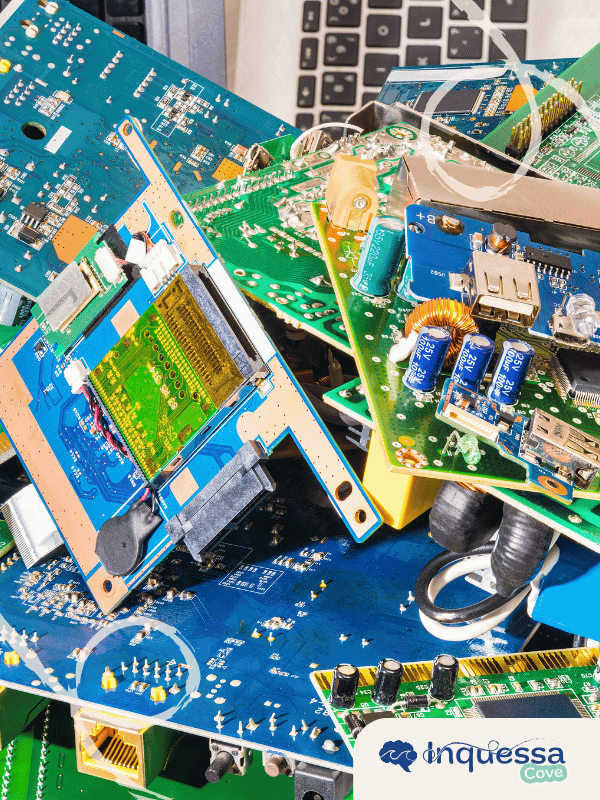
Waste from discarded electronics that may contain plastics, metals, batteries, and other parts is called e-waste. A keyboard, cable, computer case, or other device may look like one object, but it can contain many different materials joined together.
These mixtures make collection and recycling more difficult. Plastic may be attached to metal parts, wires, circuit boards, batteries, or other components that need separate treatment. In 2022, only 22.3 percent of the world’s e-waste was officially recorded as being properly collected and recycled. Old electronics may also contain stored data or electrical parts that need careful handling. These concerns help explain why an unwanted electronic device should not automatically follow the same path as ordinary household plastic.
Medical Waste and Safety Concerns
Healthcare creates another type of waste that may need special handling. Medical waste is discarded material such as used gloves, needles, or bandages from healthcare activities. This waste requires careful handling.
Some plastic medical products may have been in contact with materials that could carry contamination. This means a plastic item that might otherwise seem recyclable cannot always enter an ordinary recycling system.
About 85 percent of medical plastic waste made in hospitals cannot be recycled. Instead, some of this waste must be burned in special facilities at temperatures above 850°C. This treatment can help reduce health risks, but it also means useful plastic material may be lost after only a short time in use.
Sorting, Treatment, and Disposal
Before special waste can be recycled or disposed of, it often needs to be separated into different groups. Electronics may be taken apart so batteries, metals, plastics, cables, and other parts can follow the correct pathways.
Medical waste may also be sorted according to its safety needs. Some packaging or unused materials may be handled differently from items that were contaminated during medical care. These systems depend on workers, equipment, clear labels, and rules. Sorting correctly at the beginning can help keep dangerous or unsuitable materials out of the wrong treatment system.
Why Some Waste Cannot Enter Regular Bins
Waste may follow special disposal rules when contamination, hazardous materials, electronics, or mixed parts require a different collection or treatment pathway.
These rules are not simply about keeping bins organized. A damaged electronic device may contain a battery or other materials that need special handling. Medical items may need to stay separate because of contamination or injury risks.
Regular recycling systems are designed for certain materials and conditions. When waste does not fit those conditions, a different pathway may be needed to protect workers, equipment, and the environment.
Designing Safer Endings
The disposal problem begins partly with the way products are designed. Electronics that are difficult to take apart can make useful plastics harder to recover. Medical products made from several materials can also be difficult to sort after use.
Designers can think about what will happen at the end of a product’s life, not only how it works while being used. Making products easier to separate, labeling materials clearly, and planning safer treatment pathways can all improve what happens after disposal.
Plastic from electronics and hospitals may need special handling because the waste contains more than plastic alone. The materials, risks, and product design all help determine where that waste can safely go.
Plastic Waste With Special Rules
Plastic waste from electronics and hospitals is not always handled like a bottle, wrapper, or food container. These products may contain other materials, contamination risks, electrical parts, or substances that require special treatment.
Computer plastics can contain heavy metals along with other materials used in electronic equipment. Recycling one metric ton of plastic from e-waste can prevent up to two metric tons of carbon emissions compared with producing the same amount of new plastic.
Recovering the material can therefore be valuable, but separating it safely from the rest of a device is more complicated than placing ordinary plastic in a recycling bin.
Electronics and Mixed Materials
Discarded electronics contain mixtures of plastics, metals, batteries, and other components that may need special handling. This type of waste is called e-waste.
A keyboard, cable, computer case, or other device may look like one object, but it can contain many materials joined together. Plastics may be attached to metal parts, wires, circuit boards, batteries, or other components that need separate treatment.
In 2022, only 22.3 percent of the world’s e-waste was documented as properly collected and recycled.
Old electronics may also contain stored data or electrical components that need careful handling. These concerns help explain why an unwanted computer or device should not automatically follow the same pathway as ordinary household plastic.
Medical Waste and Safety Concerns
Healthcare creates another special waste stream. Medical waste, waste such as used medical supplies, may require special disposal because of contamination risks.
Some plastic medical products may have been in contact with materials that could carry contamination. This means a plastic item that might otherwise seem recyclable cannot always enter an ordinary recycling system.
Roughly 85 percent of medical plastic waste generated in hospitals cannot be recycled. Instead, it must be burned in specialized facilities at temperatures above 850°C.
This treatment helps reduce health risks, but it also means useful plastic material may be lost after a very short period of use.
Sorting, Treatment, and Disposal
Before special waste can be recycled or disposed of, it often needs to be separated into different categories. Electronics may be taken apart so batteries, metals, plastics, cables, and other components can follow suitable pathways.
Medical waste may also be sorted according to its safety needs. Some packaging or unused materials may be handled differently from items that have been contaminated during care.
These systems depend on workers, equipment, clear labels, and rules. Sorting correctly at the beginning can help prevent dangerous or unsuitable materials from entering the wrong treatment system.
Why Some Waste Cannot Enter Regular Bins
Special disposal rules are used when some waste cannot safely go into regular bins. This can include contaminated medical waste or electronics.
These rules are not simply about keeping bins organized. A damaged electronic device could contain a battery or other materials that need special handling. Medical items may need to stay separate because of contamination or injury risks.
Regular recycling systems are designed for certain materials and conditions. When waste falls outside those conditions, a different pathway may be needed to protect workers, equipment, and the environment.
Designing Safer Endings
The disposal problem begins partly with how products are designed. Electronics that are difficult to take apart can make useful plastics harder to recover. Medical products that combine many materials may also be difficult to sort after use.
Designers can consider what will happen at the end of a product’s life, not only how it works while being used. Easier separation, clearer material identification, and safer treatment pathways can all improve what happens after disposal.
Plastic from electronics and hospitals may need special handling because the waste carries more than plastic alone. The materials, risks, and product design all help determine where that waste can safely go.
Plastic Waste With Special Rules
Plastic waste from electronics and hospitals is not always handled like a bottle, wrapper, or food container. These products may contain other materials, contamination risks, electrical parts, or substances that require special treatment.
Computer plastics can contain heavy metals along with other materials used in electronic equipment. Recycling one metric ton of plastic from e-waste can prevent up to two metric tons of carbon emissions compared with producing the same amount of new plastic. Recovering the material can therefore be valuable, but separating it safely from the rest of the device is more complicated than placing ordinary plastic in a recycling bin.
Electronics and Mixed Materials
Waste from discarded electronics that may contain plastics, metals, batteries, and other components is called e-waste. A keyboard, cable, computer case, or other device may look like one object, but it can contain many materials joined together.
Those mixtures make collection and recycling difficult. Plastics may be attached to metal parts, wires, circuit boards, batteries, or other components that need separate treatment. In 2022, only 22.3 percent of the world’s e-waste was documented as properly collected and recycled.
Old electronics may also contain stored data or electrical components that need careful handling. These concerns help explain why an unwanted computer or device should not automatically follow the same pathway as ordinary household plastic.
Medical Waste and Safety Concerns
Healthcare creates another special waste stream. Medical waste, discarded material such as used gloves, needles, or bandages from healthcare activities, requires careful handling.
Some plastic medical products may have been in contact with materials that could carry contamination. That means a plastic item that might otherwise seem recyclable cannot always enter an ordinary recycling system.
Roughly 85 percent of medical plastic waste generated in hospitals cannot be recycled and instead must be burned in specialized facilities at temperatures above 850°C. This treatment helps reduce health risks, but it also means useful plastic material may be lost after a very short period of use.
Sorting, Treatment, and Disposal
Before special waste can be recycled or disposed of, it often needs to be separated into different categories. Electronics may be taken apart so batteries, metals, plastics, cables, and other components can follow appropriate pathways.
Medical waste may also be sorted according to its safety requirements. Some packaging or unused materials may be handled differently from items that have been contaminated during care.
These systems depend on workers, equipment, clear labels, and rules. Sorting correctly at the beginning can help prevent dangerous or unsuitable materials from entering the wrong treatment system.
Why Some Waste Cannot Enter Regular Bins
Waste may follow special disposal rules when contamination, hazardous materials, electronics, or mixed components require a different collection or treatment pathway.
These rules are not simply about keeping bins organized. A damaged electronic device could contain a battery or other materials that need special handling. Medical items may need to be kept separate because of contamination or injury risks.
Regular recycling systems are designed for certain materials and conditions. When waste falls outside those conditions, a different pathway may be needed to protect workers, equipment, and the environment.
Designing Safer Endings
The disposal problem begins partly with how products are designed. Electronics that are difficult to take apart can make useful plastics harder to recover. Medical products that combine many materials may also be difficult to sort after use.
Designers can consider what will happen at the end of a product’s life, not only how it works while being used. Easier separation, clearer material identification, and safer treatment pathways can all improve what happens after disposal.
Plastic from electronics and hospitals may need special handling because the waste carries more than plastic alone. The materials, risks, and product design all help determine where that waste can safely go.
Plastic Waste With Special Rules
Plastic waste from electronics and hospitals is not always handled like a bottle, wrapper, or food container. These products may contain other materials, contamination risks, electrical parts, or substances that require special treatment.
Computer plastics can contain heavy metals along with other materials used in electronic equipment. Recycling one metric ton of plastic from e-waste can prevent up to two metric tons of carbon emissions compared with producing the same amount of new plastic. Recovering that plastic can therefore be useful, but separating it safely from the rest of a device is more complicated than placing ordinary plastic in a recycling bin.
Electronics and Mixed Materials
Waste from discarded electronic products containing plastics, metals, batteries, and other materials is called e-waste. A keyboard, cable, computer case, or other device may look like one object, but it can contain many different materials joined together.
These mixtures make collection and recycling difficult. Plastics may be attached to metal parts, wires, circuit boards, batteries, or other components that need separate treatment. In 2022, only 22.3 percent of the world’s e-waste was documented as properly collected and recycled.
Old electronics may also contain stored data or electrical components that need careful handling. These concerns help explain why an unwanted computer or device should not automatically follow the same pathway as ordinary household plastic.
Medical Waste and Safety Concerns
Healthcare creates another special waste stream. Medical waste, discarded healthcare materials such as gloves or needles, may need special treatment because of health risks.
Some plastic medical products may have been in contact with materials that could carry contamination. A plastic item that might otherwise seem recyclable therefore cannot always enter an ordinary recycling system.
Roughly 85 percent of medical plastic waste generated in hospitals cannot be recycled. Instead, it must be burned in specialized facilities at temperatures above 850°C. This treatment helps reduce health risks, but it also means useful plastic material may be lost after a very short period of use.
Sorting, Treatment, and Disposal
Before special waste can be recycled or disposed of, it often needs to be separated into different categories. Electronics may be taken apart so batteries, metals, plastics, cables, and other components can follow suitable pathways.
Medical waste may also be sorted according to its safety requirements. Some packaging or unused materials may be handled differently from items that have been contaminated during care.
These systems depend on workers, equipment, clear labels, and rules. Sorting correctly at the beginning can help prevent dangerous or unsuitable materials from entering the wrong treatment system.
Why Some Waste Cannot Enter Regular Bins
Special disposal rules require some waste to follow different collection or treatment pathways because ordinary disposal could create safety, contamination, or environmental risks.
These rules are not simply about keeping bins organized. A damaged electronic device could contain a battery or other materials that need special handling. Medical items may need to be kept separate because of contamination or injury risks.
Regular recycling systems are designed for certain materials and conditions. When waste falls outside those conditions, a different pathway may be needed to protect workers, equipment, and the environment.
Designing Safer Endings
The disposal problem begins partly with the way products are designed. Electronics that are difficult to take apart can make useful plastics harder to recover. Medical products that combine many materials may also be difficult to sort after use.
Designers can consider what will happen at the end of a product’s life, not only how it works while being used. Easier separation, clearer material identification, and safer treatment pathways can all improve what happens after disposal.
Plastic from electronics and hospitals may need special handling because the waste contains more than plastic alone. The materials, risks, and product design all help determine where that waste can safely go.
Key Vocabulary
hazardous material (noun) ⚠️ A material that can create safety, health, or environmental risks and may need special handling. (dangerous material, hazardous substance)
heavy metal (noun) A type of metal that can be harmful in certain amounts or forms and may be found in some electronic products. (metal contaminant, toxic metal)
circuit board (noun) A board inside an electronic device that holds and connects electrical components. (electronic board, printed circuit board)
component (noun) One part of a larger product or system. (part, piece)
contamination risk (noun) The possibility that an item carries material that could make people, equipment, or other waste unsafe. (risk of contamination, safety risk)
treatment pathway (noun) ️ The route waste follows through a particular process before its final disposal or recovery. (waste-treatment route, processing pathway)
incineration (noun) The controlled burning of waste, usually at high temperatures. (waste burning, thermal treatment)
material recovery (noun) ♻️ The process of separating useful materials from discarded products so they can be used again. (resource recovery, material reuse)
stored data (noun) Information saved on an electronic device or storage component. (saved information, digital data)
material identification (noun) ️ Determining what materials a product contains so they can be handled correctly. (material recognition, identification)
specialized facility (noun) A place designed and equipped to safely handle a particular type of material or waste. (special treatment facility, dedicated facility)
