
Plastic That Keeps Electricity Safer
About this Article
Lines of Inquiry
- The protective functions plastic performs around conducting wires and electrical components.
- Connections between a cable’s intended use and the combination of flexibility, heat resistance, moisture resistance, and wear resistance its covering needs.
- Decisions engineers make when testing and selecting materials that reduce electrical and fire risks.
Guiding Questions
- Why do conducting wires need a layer of insulation around them?
- Why might different cables need different kinds of plastic coverings?
- How can testing a plastic’s behavior around heat and flame help make electrical products safer?
Plastic That Keeps Electricity Safer
Electricity Needs a Safe Path
Electricity needs a controlled path through wires and cables. The metal inside a wire carries electric current, but that current should not spread into nearby objects or people.
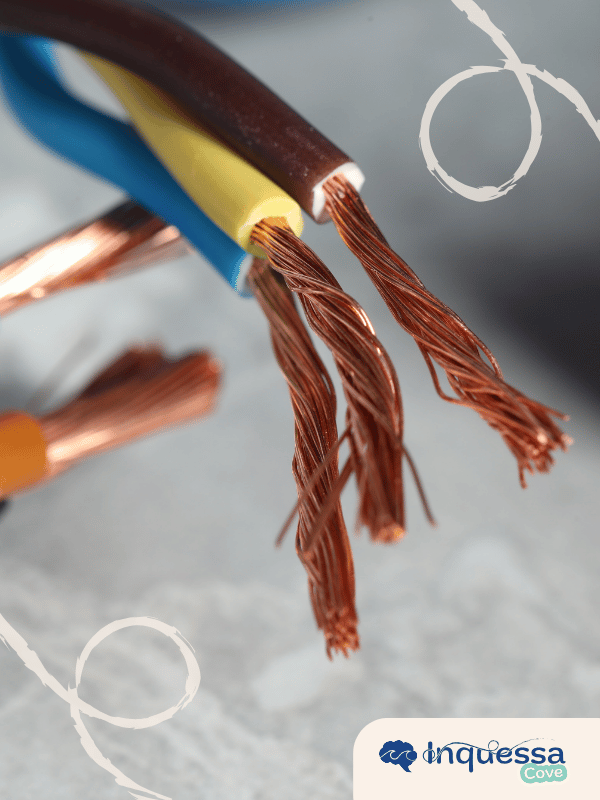
That is why electrical wires are usually covered instead of being left as bare metal. Chargers, extension cords, lamps, headphones, classroom devices, and appliance cables all depend on this basic idea. The plastic around a wire is not there only for color or appearance. It helps control where electricity can and cannot travel.
Plastic as Insulation
Insulation is material that reduces the movement of electricity, heat, or sound between places. Around electrical wires, plastic insulation helps keep electric current inside the conductor and away from surrounding materials.
One common material used for this job is PVC, or polyvinyl chloride. PVC is often used to cover wires and cables. It can resist flame, moisture, and rubbing or wear. Other plastics may be chosen for different cable jobs. A charger cord that bends often may use flexible TPE plastic, while a cable that faces more rubbing or harder use may use polyurethane, or PUR.
Flexible Cables for Everyday Use
A safe cable also needs to move. A rigid covering would make many everyday devices difficult to use. Phone chargers bend around furniture, headphones twist inside bags, and appliance cords move when equipment is carried or stored.
Plastic can be flexible enough to bend with a wire while still forming a protective layer around it. Repeated bending puts stress on both the wire and its covering. Different cables therefore need different balances of flexibility, strength, and resistance to wear.
Protecting People and Devices
Plastic insulation supports electrical safety, which means being protected from electrical hazards. It helps keep current away from places where it could cause harm. It can also stop conducting parts from touching when they need to stay separate.
Engineers also test plastics that are used around electricity. Plastics used around electricity can be tested to see how they react to fire. Tests can check whether the plastic catches fire, stops burning on its own, or produces burning drops. One standard used for these tests is called UL 94. Tests like these help engineers compare materials and choose plastics that are suitable for different electrical products.
Damaged cable covering is therefore more than a problem with how a cable looks. If the insulation cracks, tears, or pulls away, the conductor underneath may become exposed. The plastic covering is part of the cable’s safety system, helping protect both the device and the people using it.
Electricity Needs a Safe Path
Electricity needs a controlled path through wires and cables. The metal inside a wire carries electric current, but that current should not spread into nearby objects or people.
That is why electrical wires are usually covered instead of being left as bare metal. Chargers, extension cords, lamps, headphones, classroom devices, and appliance cables all depend on this basic idea. The plastic around a wire is not there only for color or neatness. It helps control where electricity can and cannot travel.
Plastic as Insulation
Insulation is material used to reduce the unwanted movement of electricity, heat, or sound. Plastic insulation around electrical wires helps contain electric current and protect people and devices. Electrical cables, plugs, tools, and many electronic devices use plastic insulation as a protective layer.
One common material used for this job is PVC, or polyvinyl chloride.
PVC is a common material used to insulate wires and cables. It is valued because it can resist flame, moisture, and wear from rubbing.
Other plastics can be chosen for different cable needs, including flexibility, heat resistance, and protection from wear. A charger cord that bends repeatedly may use a flexible material such as TPE, while a cable that faces frequent rubbing or harder use may use polyurethane, or PUR. The material is chosen based on what the cable needs to withstand.
Flexible Cables for Everyday Use
A safe cable also needs to move. A rigid covering would make many everyday devices difficult to use. Phone chargers bend around furniture, headphones twist in bags, and appliance cords move whenever equipment is carried or stored.
Plastic can be made flexible enough to bend with the wire while still forming a protective layer around it. This matters because repeated bending places stress on both the wire and its covering. Different cables therefore need different balances of flexibility, strength, and resistance to wear.
Protecting People and Devices
Electrical safety, conditions that reduce electrical danger, can influence which materials are used around electrical parts. Plastic insulation helps keep current away from places where it could cause harm. It also helps prevent conducting parts from touching when they should remain separate.
Engineers test plastics used around electricity because these materials may sometimes be exposed to heat or flame.
UL 94 is a flammability standard used to test how plastics react to flame. Tests can look at whether a plastic catches fire, stops burning on its own, or produces flaming drips.
Tests like these help designers compare materials and decide which plastics are suitable for different electrical products.
Damaged cable coating is therefore more than a cosmetic problem. If insulation cracks, tears, or pulls away, the conductor underneath may become exposed. The plastic covering is part of the cable’s safety system, helping protect both the device and the people using it.
Electricity Needs a Safe Path
Electricity needs a controlled path through wires and cables. The metal inside a wire carries electric current, but that current should not spread into nearby objects or people.
That is why electrical wires are usually covered instead of being left as bare metal. The covering separates the conducting wire from the world around it. Chargers, extension cords, lamps, headphones, classroom devices, and appliance cables all depend on this basic idea. The plastic around a wire is not there only for color or neatness. It helps control where electricity can and cannot travel.
Plastic as Insulation
Insulation is material that reduces the movement of electricity, heat, or sound between places. Around electrical wires, plastic insulation helps keep current within the conductor and reduces contact with surrounding materials.
One common material used for this job is PVC, or polyvinyl chloride. PVC is widely used for wire and cable insulation because it can resist flame, moisture, and abrasion. Other plastics can be chosen for different cable needs, including flexibility, heat resistance, and protection from wear. A charger cord that bends repeatedly may use a flexible material such as TPE, while a cable that faces frequent rubbing or harder use may use polyurethane, or PUR. The material is chosen based on what the cable needs to withstand.
Flexible Cables for Everyday Use
A safe cable also needs to move. A rigid covering would make many everyday devices difficult to use. Phone chargers bend around furniture, headphones twist in bags, and appliance cords move whenever equipment is carried or stored.
Plastic can be made flexible enough to bend with the wire while still forming a protective layer around it. This matters because repeated bending places stress on both the wire and its covering. Different cables therefore need different balances of flexibility, strength, and resistance to wear. The plastic surrounding the wire must continue protecting the conductor while the cable performs its everyday job.
Protecting People and Devices
Plastic insulation supports electrical safety, the condition of being protected from electrical hazards, by helping keep current away from places where it could cause harm. It also helps prevent nearby conducting parts from touching when they should remain separate.
Engineers test plastics used around electricity because these materials may sometimes be exposed to heat or flame. UL 94 is a flammability standard used to test how plastics react to flame, including whether they ignite, stop burning on their own, or produce flaming drips. Tests like these help designers compare materials and decide which plastics are suitable for different electrical products.
Damaged cable coating is therefore more than a cosmetic problem. If insulation cracks, tears, or pulls away, the conductor underneath may become exposed. The plastic covering is part of the cable’s safety system, helping protect both the device and the people using it.
Electricity Needs a Safe Path
Electricity needs a controlled path through wires and cables. The metal inside a wire carries electric current, but that current should not spread into nearby objects or people.
That is why electrical wires are usually covered instead of being left as bare metal. The covering separates the conducting wire from the world around it. Chargers, extension cords, lamps, headphones, classroom devices, and appliance cables all depend on this basic idea. The plastic around a wire is not there only for color or neatness. It helps control where electricity can and cannot travel.
Plastic as Insulation
Insulation is material designed to restrict the transfer of electricity, heat, or sound. Around electrical wires, plastic insulation helps keep current within the conductor and reduces contact with surrounding materials.
One common material used for this job is PVC, or polyvinyl chloride. PVC is widely used as insulation around wires and cables because it can resist flame, moisture, and wear from rubbing. Other plastics can be chosen when cables need different qualities, such as flexibility, heat resistance, or protection from repeated wear.
A charger cord that bends again and again may use a flexible material such as TPE. A cable that faces more rubbing or harder use may use polyurethane, or PUR. These examples show why cable coverings are not all made from exactly the same plastic. The material is chosen according to what the cable needs to handle.
Flexible Cables for Everyday Use
A safe cable also needs to move. A rigid covering would make many everyday devices difficult to use. Phone chargers bend around furniture, headphones twist inside bags, and appliance cords move whenever equipment is carried or stored.
Plastic can be made flexible enough to bend with the wire while still forming a protective layer around it. Repeated bending places stress on both the metal wire and the covering around it. Different cables therefore need different balances of flexibility, strength, and resistance to wear. The plastic must continue protecting the conductor while the cable performs its everyday job.
Protecting People and Devices
Plastic insulation supports electrical safety, the condition of being protected from electrical hazards, by helping keep current away from places where it could cause harm. It also helps prevent conducting parts from touching when they need to remain separate.
Engineers test plastics used around electricity because these materials may sometimes be exposed to heat or flame. UL 94 is a flammability standard used to test how plastics react to flame, including whether they ignite, stop burning on their own, or produce flaming drips. Tests like these help designers compare materials and decide which plastics are suitable for different electrical products.
Damaged cable coating is therefore more than a cosmetic problem. If insulation cracks, tears, or pulls away, the conductor underneath may become exposed. The plastic covering is part of the cable’s safety system, helping protect both the device and the people using it.
Key Vocabulary
electric current (noun) ⚡ The movement of electric charge through a material such as a wire. (electrical flow, current)
conductor (noun) A material that allows electric current to move through it easily. (conducting material, electrical conductor)
electrical hazard (noun) ⚠️ A situation that could cause harm through unsafe contact with electricity. (electrical danger, safety risk)
polyvinyl chloride (noun) A type of plastic commonly called PVC and often used to cover wires and cables. (PVC plastic)
flammability (noun) How easily a material catches fire and continues burning. (ability to burn, fire behavior)
self-extinguishing (adjective) Able to stop burning after the source of flame is removed. (stops burning, flame-resistant behavior)
exposed (adjective) No longer safely covered or protected. (uncovered, unprotected)
cable coating (noun) A protective layer around the wires or other parts inside a cable. (wire covering, protective jacket)
resistance to wear (noun) ️ The ability of a material to withstand rubbing, bending, or repeated use without being damaged quickly. (wear resistance, durability)
