Teacher Resource

Structured Inquiry Quest

Water in Our World

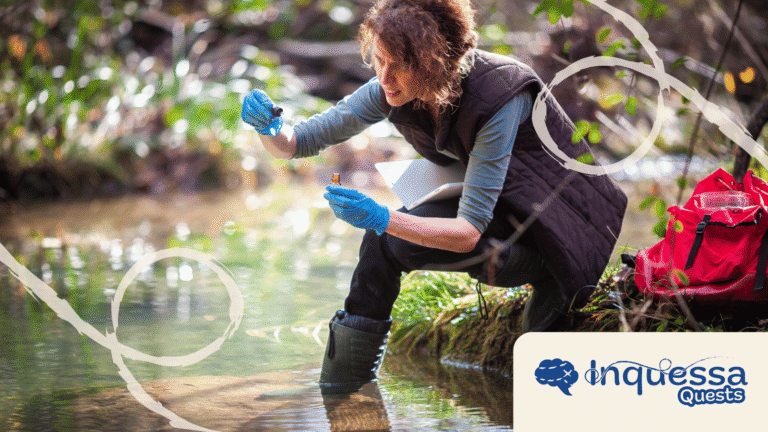
Water in Our World is a Structured Inquiry Quest that develops students’ understanding of how people use water and the consequences of that use through three connected areas: Food Production, Manufacturing, and Water in the Past.

Students begin with shared foundational knowledge before working through an intentionally sequenced set of articles. The structure provides a context for explicitly teaching and practising note-taking, identifying important information, and making connections across texts before gradually releasing more responsibility to students.

View Student Quest

Quest Overview

This Quest begins with a shared foundational article that establishes common background knowledge about water and its importance in people’s lives. This opening text can be used as a common classroom experience and as an opportunity to model the research and note-taking skills students will use throughout the Quest.

Students then move into one of three connected streams: Food Production, Manufacturing, and Water in the Past. Within each stream, the articles are intentionally sequenced so that students build their understanding as they move through the texts.

The Quest is designed to support beginning researchers. Teachers can initially provide substantial modelling and guidance, then gradually release responsibility as students become more confident identifying important ideas, recording information in their own words, and making connections between sources.

Lines of Inquiry

  • How people use water in everyday life and production
  • How human water use can affect people and the environment
  • How people and societies respond to water-related challenges

Guiding Questions

  • How do people depend on water in their everyday lives?
  • How is water used to produce the food we eat and the things we use?
  • What problems can be caused by the ways people use water?
  • How have people responded to water challenges in different times and places?
  • How can people reduce the impact of their water use?

Guidance for Teachers

This Quest is developed around a structured inquiry approach. Students should work through the articles in the order they appear on the Quest page. The sequence is intentional and is designed to help students build background knowledge step by step while practicing how to identify important information, record key ideas, and make connections across sources.

When using this Quest to teach note-taking, begin with the introductory foundational background article at the top of the Quest. This article is intended to serve as the shared modeling and practice text. Teachers can explicitly model how to decide what information is important, how to put ideas into notes rather than copy full sentences, and how to organize information in a useful way.

From there, gradually release responsibility to students as they move into the three inquiry streams.

This is also an excellent time to have support staff actively working in the classroom. Specialists, support teachers, librarians, teaching assistants, or other available adults can work alongside students as they read and take notes, helping them talk through what is important, check their understanding, and develop stronger note-taking habits.

As students become more confident, reduce the amount of direct support and encourage them to make more of these decisions independently. The goal is for students to move from heavily supported shared practice toward increasingly independent reading and note-taking while still working within the clearly structured pathway of the Quest.
 

Articles in this Quest

The Quest begins with a shared foundational article that introduces the broader role of water in people’s lives and establishes common background knowledge for the class.

Students then move through three connected article streams: Food Production, Manufacturing, and Water in the Past. The Food Production articles explore how water is used to grow and produce the food people eat. The Manufacturing articles examine how water is used to make everyday products and the effects that this use can have. The Water in the Past articles look at how people have managed, used and solved pollution problems with water in different times and places.

Together, the articles help students build a broader understanding of how people depend on water, how human water use can create challenges, and how different societies have responded to those challenges over time.

Article Title

Short teacher-facing summary

Key Understandings/Main Ideas:

Why does it appear at this point of the sequence

Article Title

Short teacher-facing summary

Key Understandings/Main Ideas:

Why does it appear at this point of the sequence

Article Title

Short teacher-facing summary

Key Understandings/Main Ideas:

Why does it appear at this point of the sequence

Article Title

Short teacher-facing summary

Key Understandings/Main Ideas:

Why does it appear at this point of the sequence

Keep Exploring Teacher Tools

Browse more Quests or return to Teacher Tools for additional resources and support.

We use cookies

We use cookies to improve your experience on this website. You may choose which types of cookies to allow and change your preferences at any time. Disabling cookies may impact your experience on this website. You can learn more by viewing our Cookie Policy.